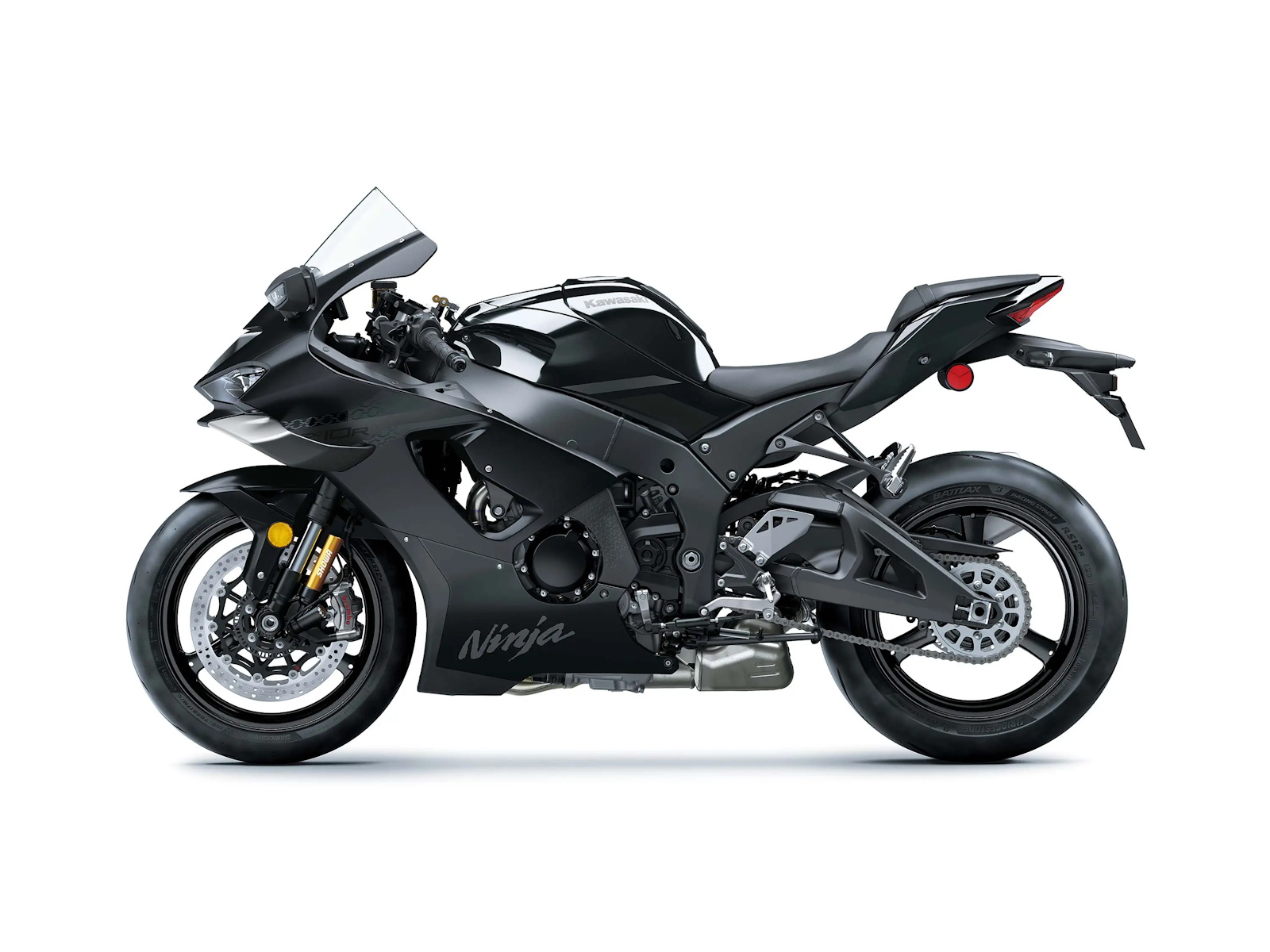
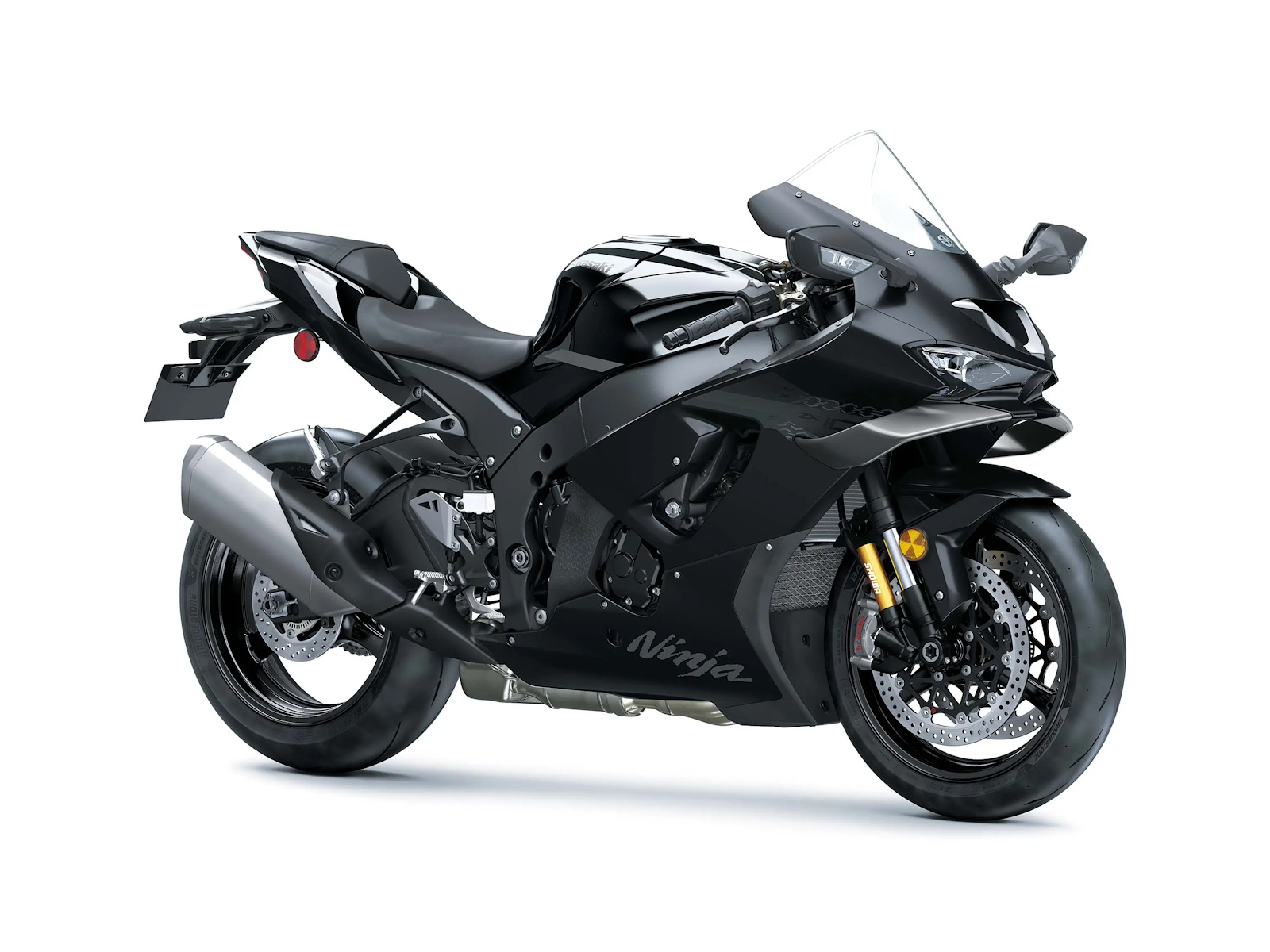
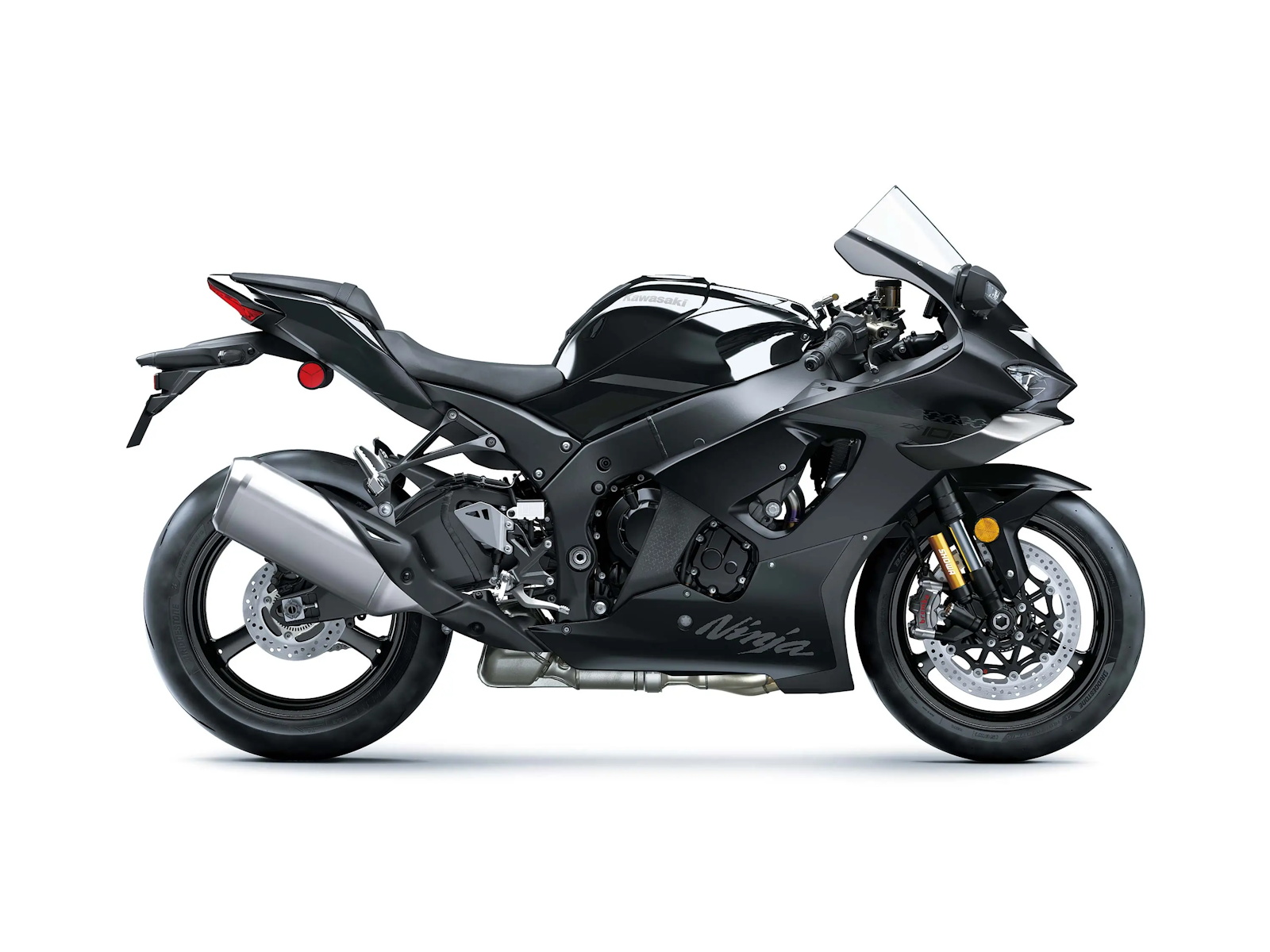
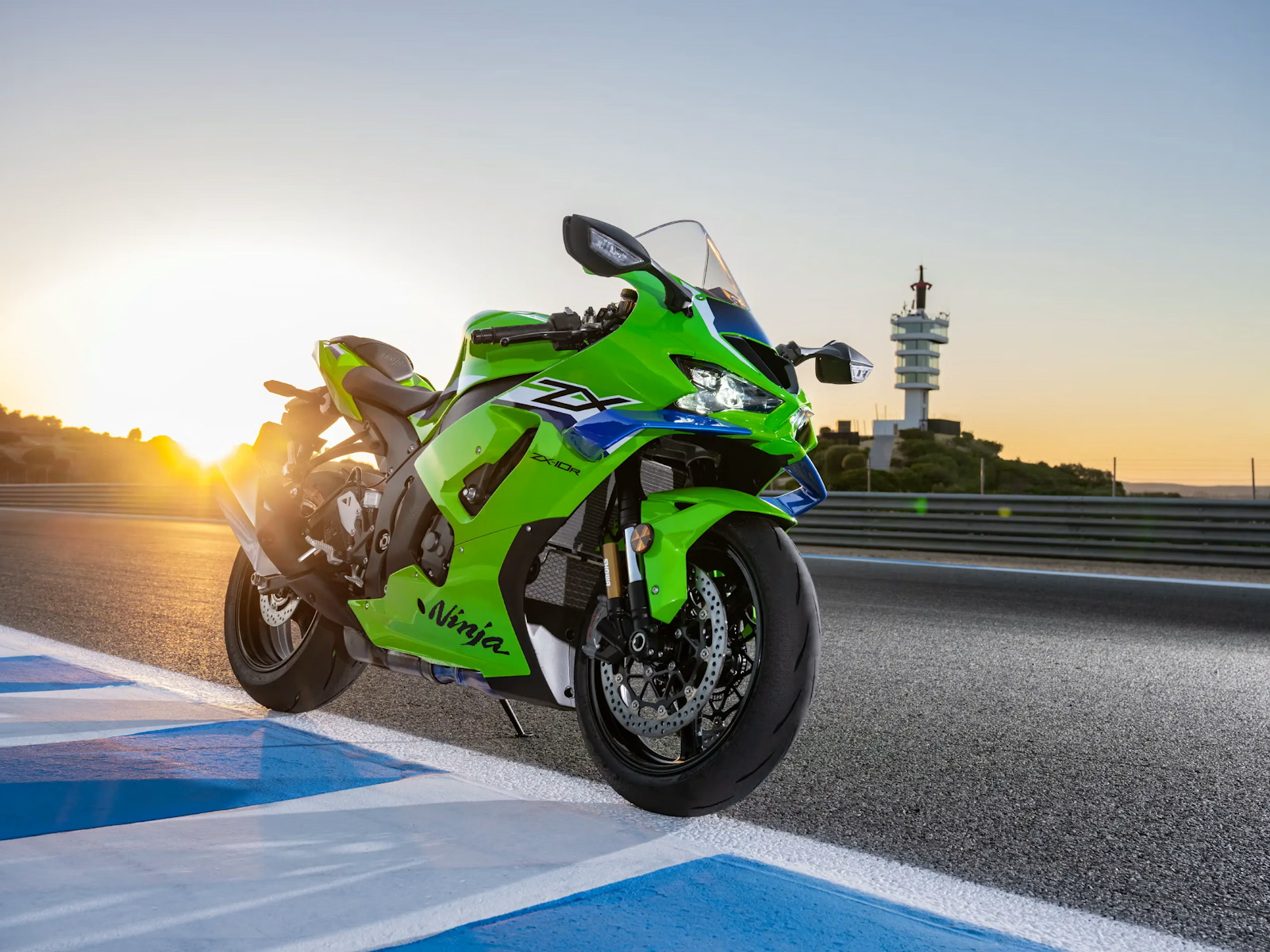
2027 Kawasaki NINJA ZX-10R NON-ABS Metallic Flat Spark Black/Metallic Spark Black
Get in Touch
Description
2027 Kawasaki NINJA ZX-10R NON-ABS Metallic Flat Spark Black/Metallic Spark Black
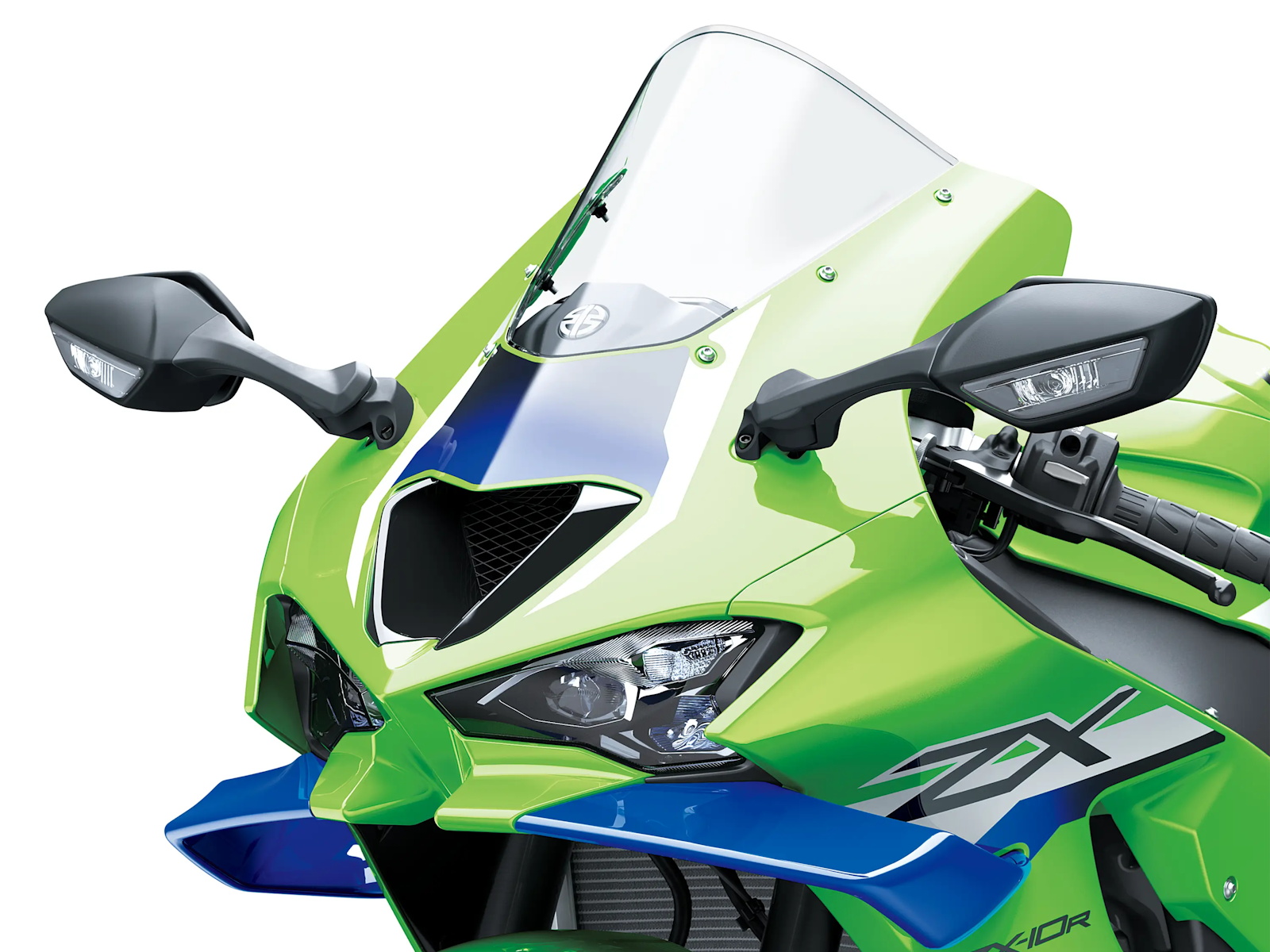
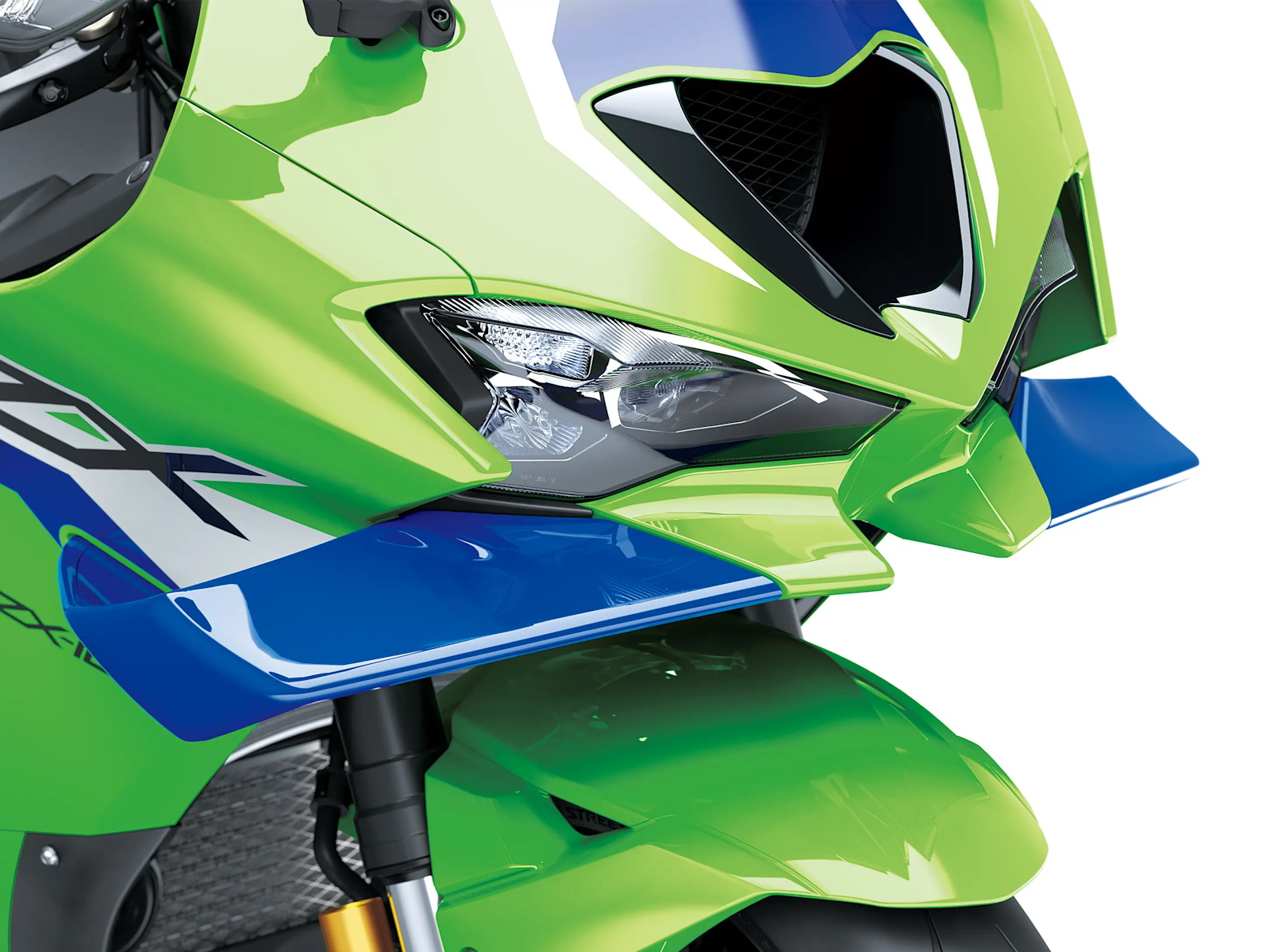
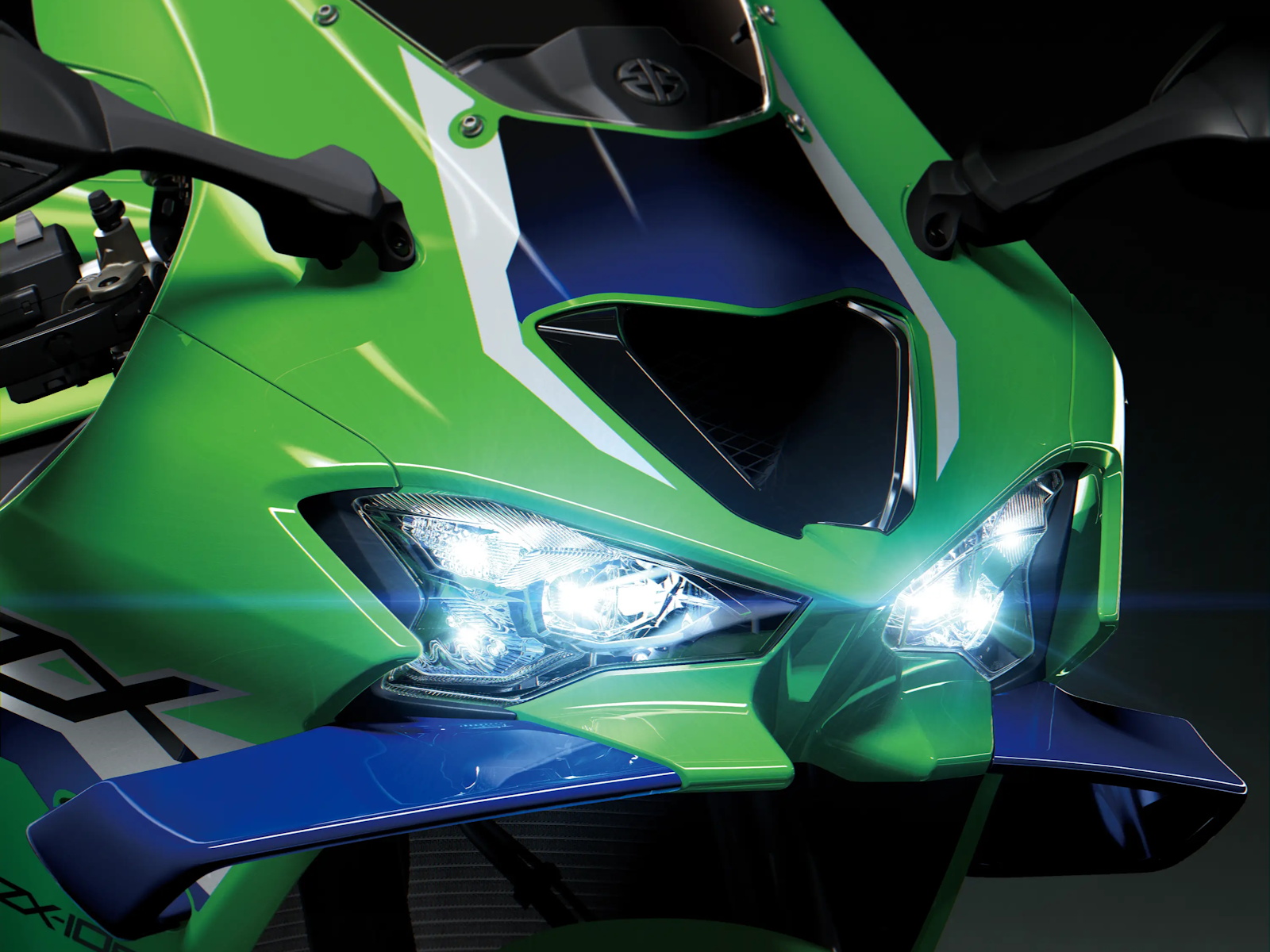
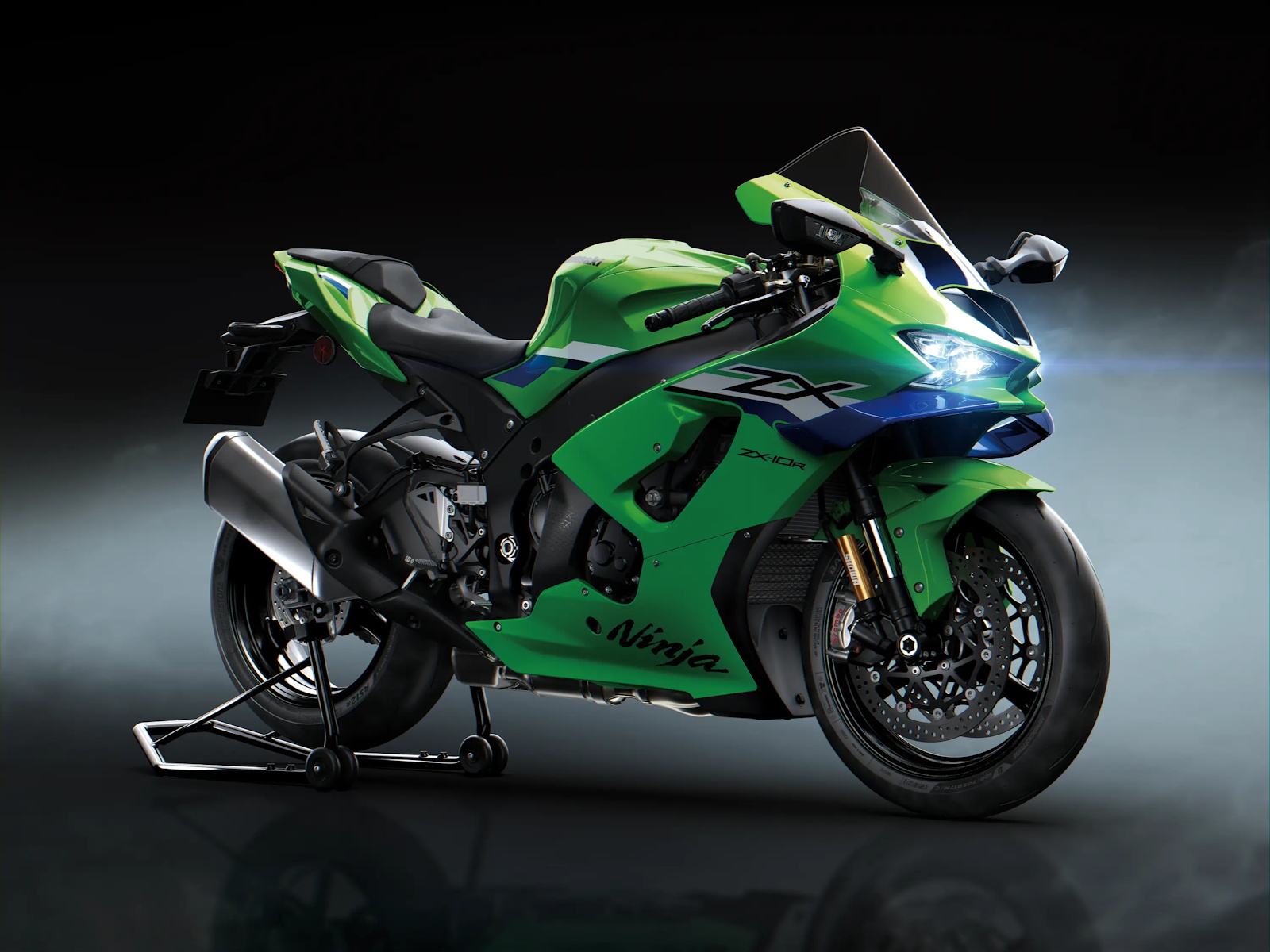
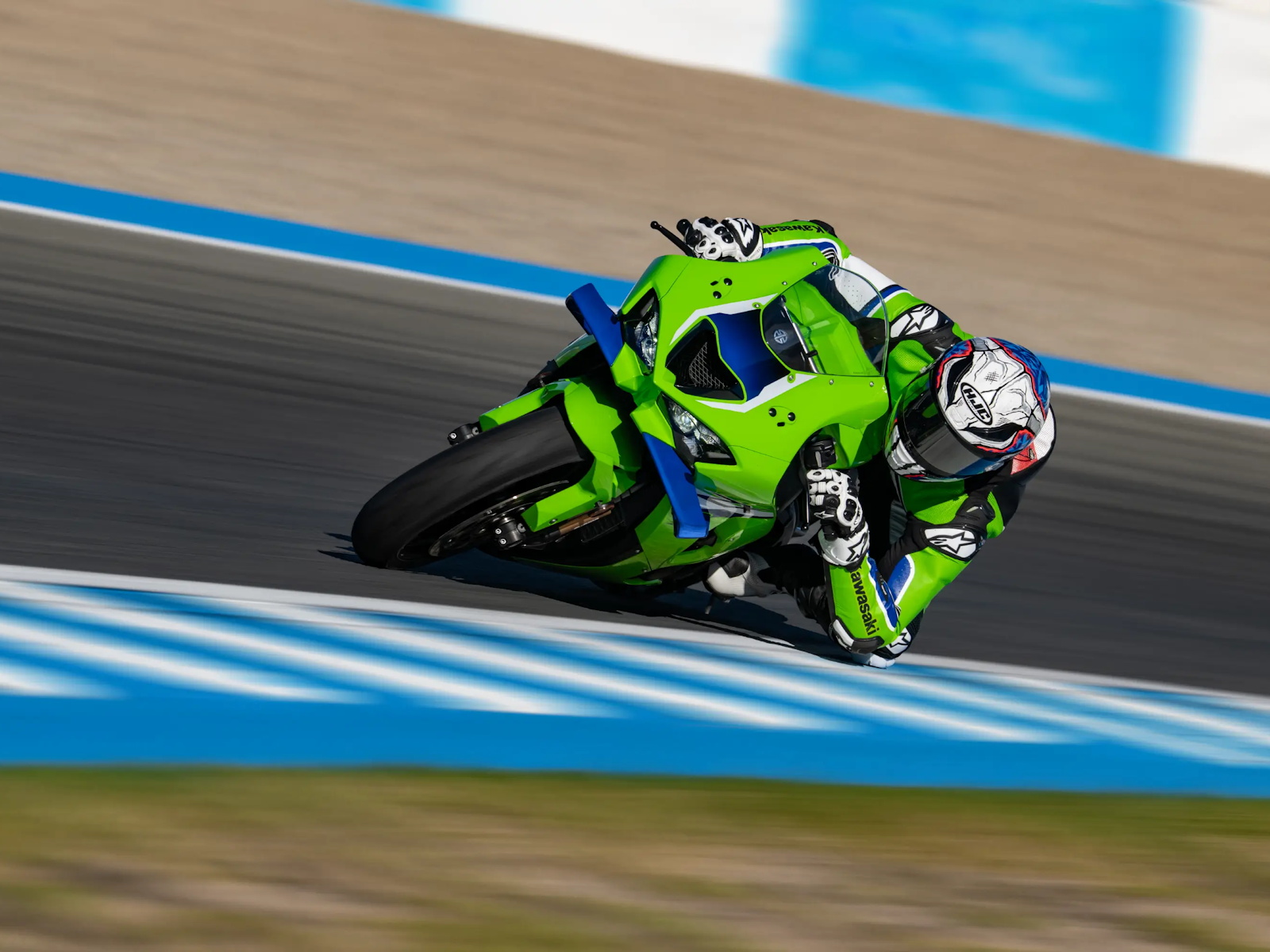
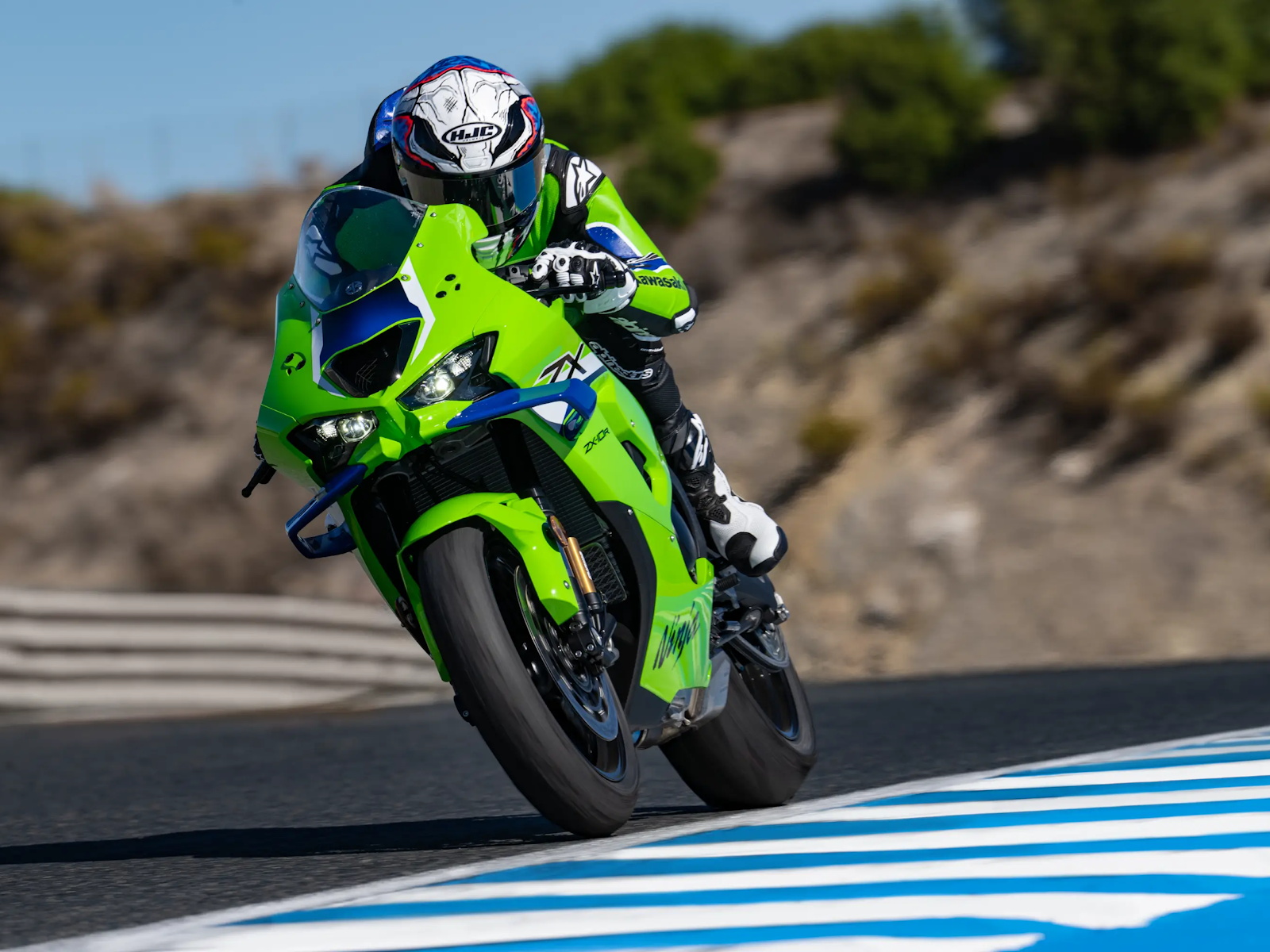
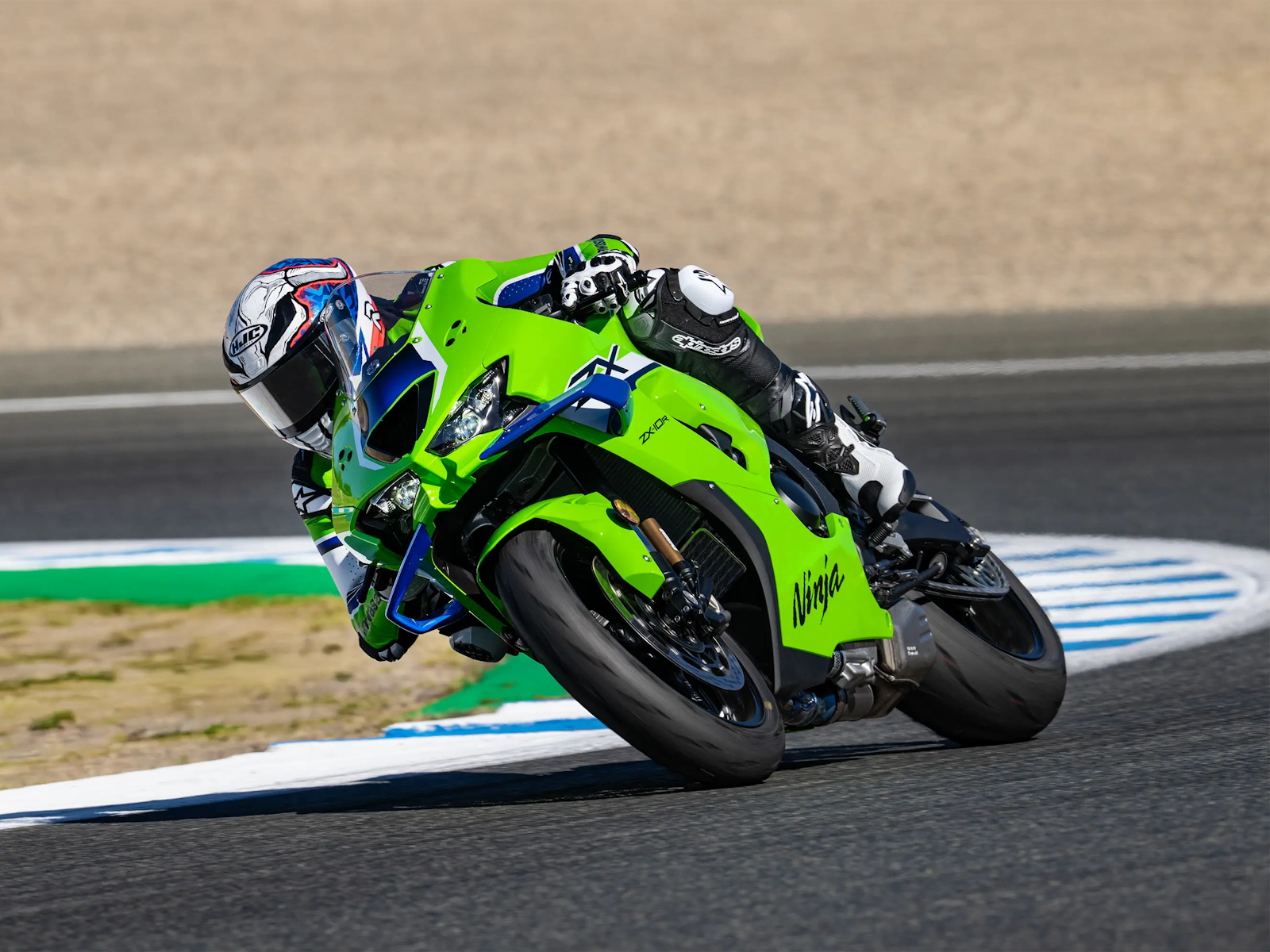
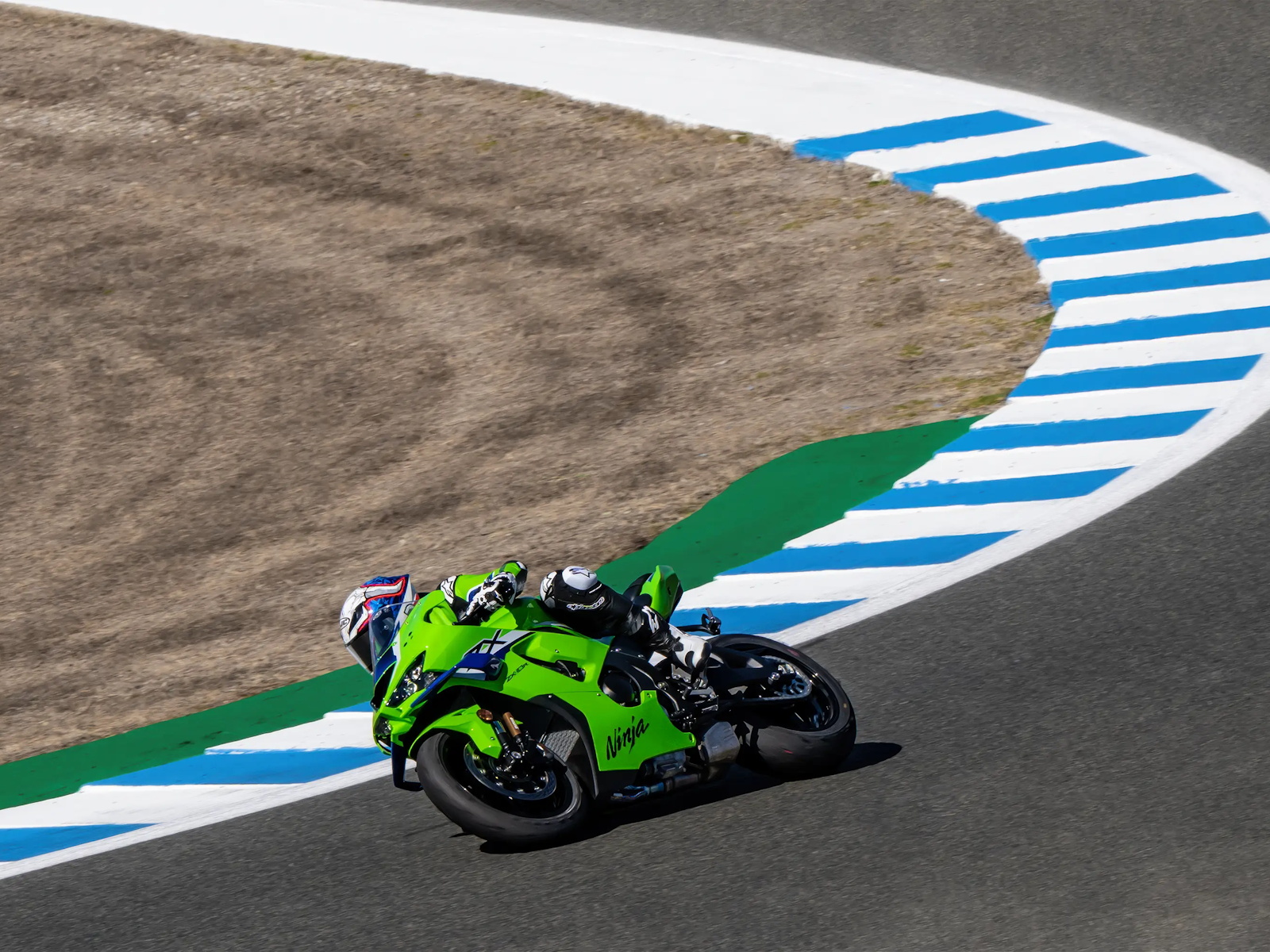
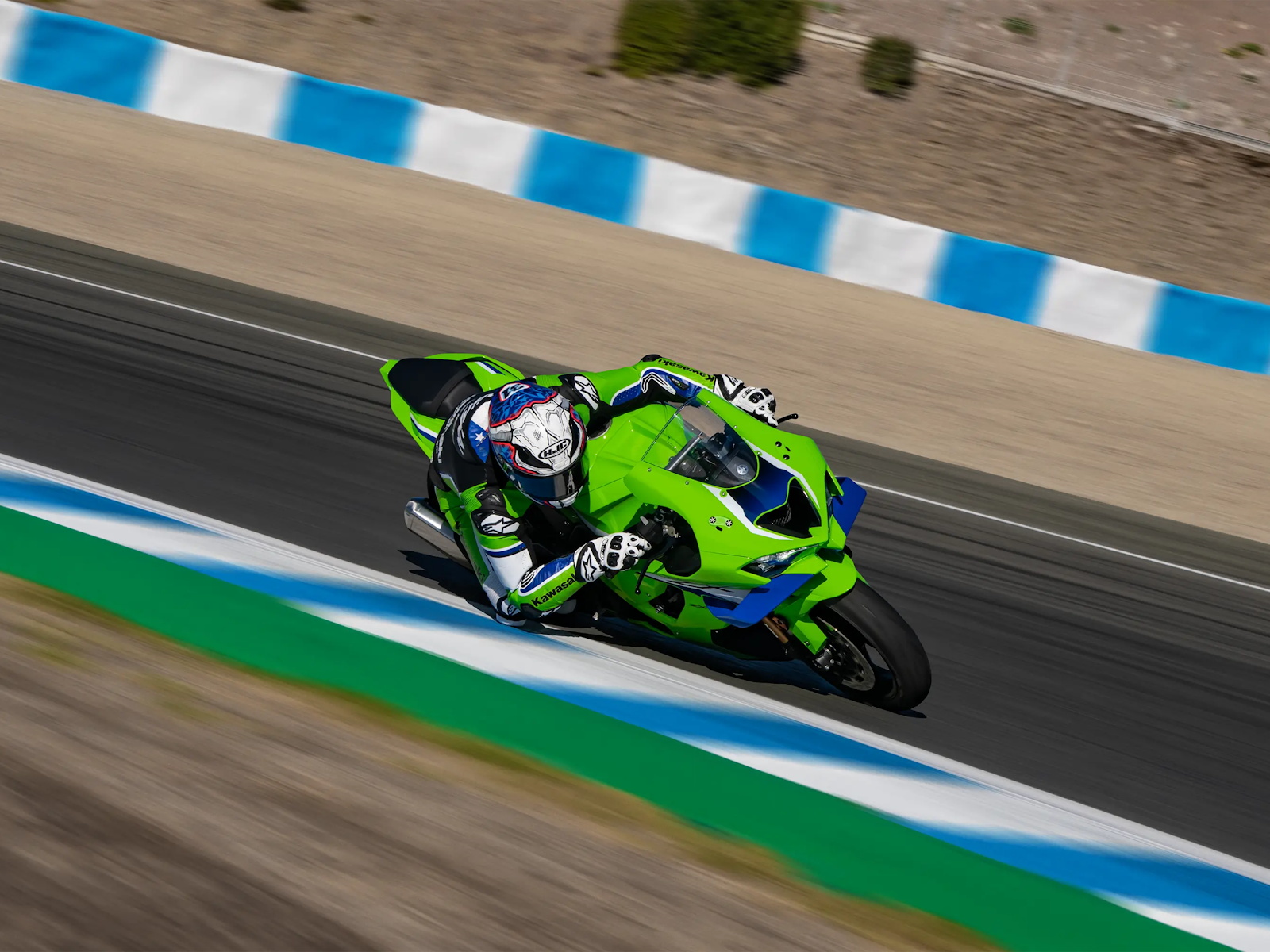
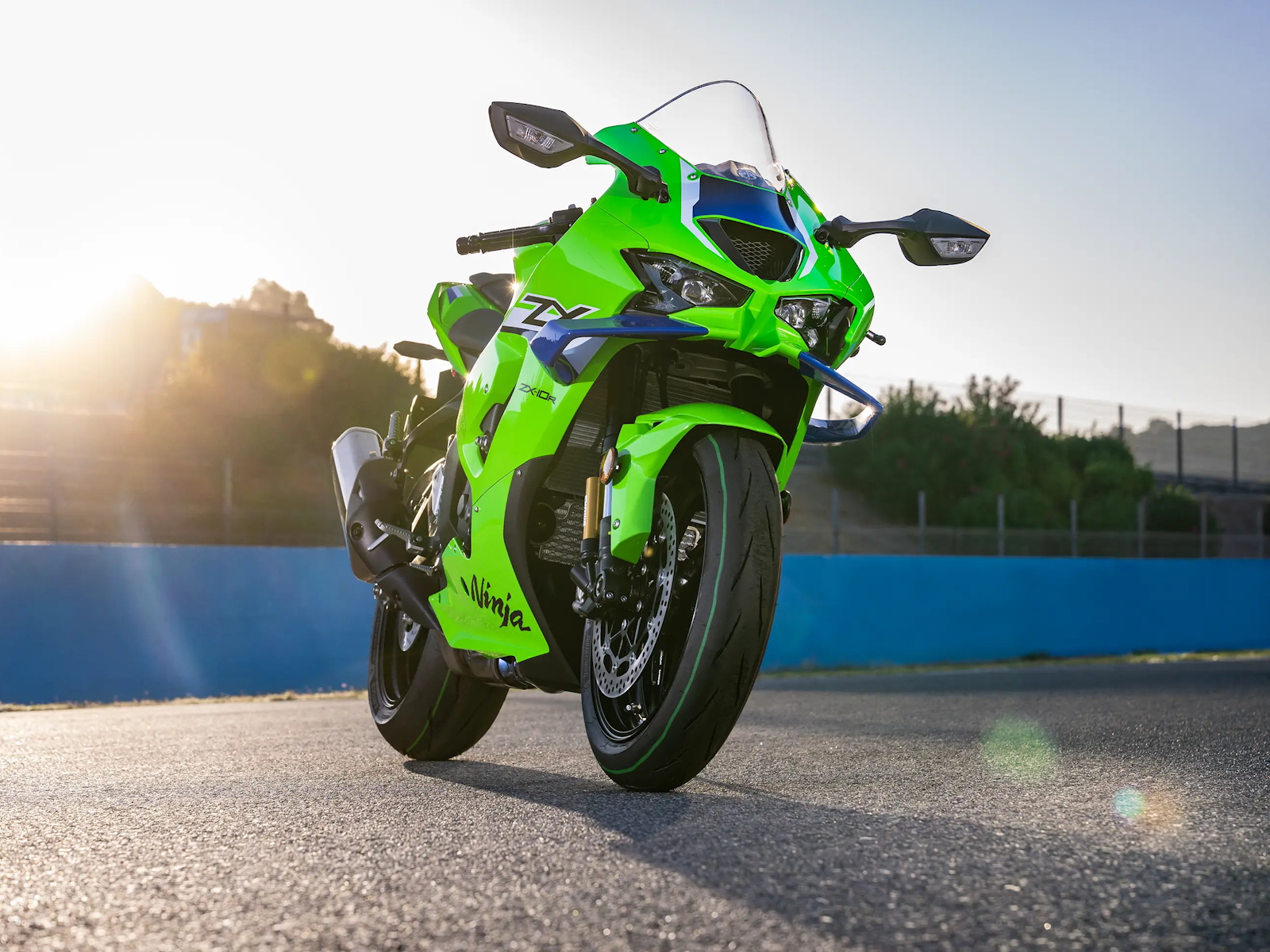
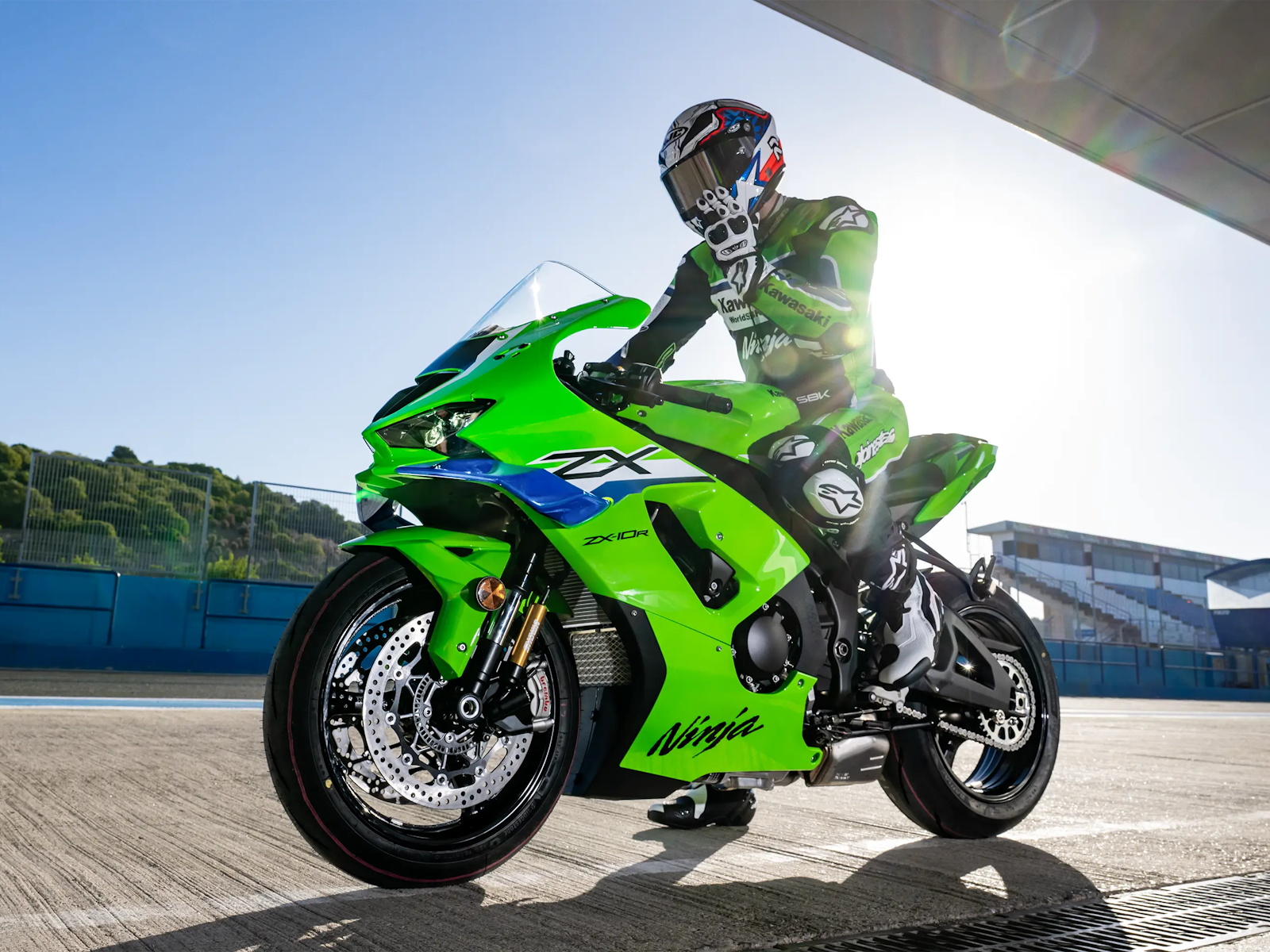
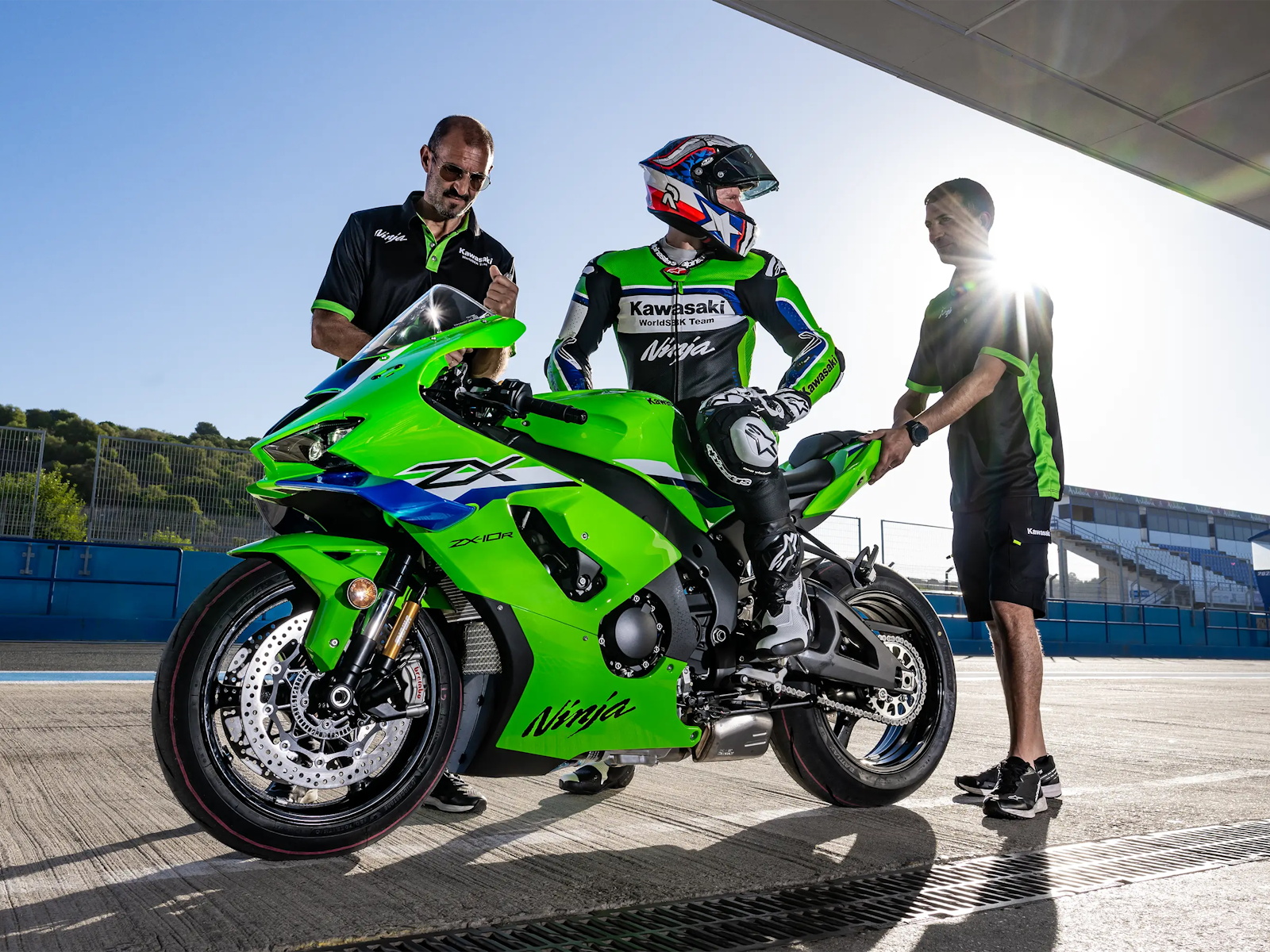
The Ninja® ZX™-10R motorcycle is built for those who rise to the challenge, a true champion supersport machine. From carrying Kawasaki riders to 7 WorldSBK Championship titles to helping performance enthusiasts explore their limits on the track, the Ninja ZX-10R motorcycle now reaches new heights. With aerodynamic winglets and a sharp, aggressive design, this is the next-generation Ninja®. Push your limits aboard the Ninja ZX-10R motorcycle equipped with a potent 998cc 4-cylinder engine, a fine-tuned chassis and suspension, a state-of-the-art electronics package, plus a whole lot more.
Engine Management Technology
Economical Riding Indicator
Using high-precision electronic control for engine management, Kawasaki models can achieve a high level of fuel efficiency. However, fuel consumption is greatly affected by throttle use, gear selection, and other elements under the rider's control. The Economical Riding Indicator is a function that indicates when current riding conditions are consuming a low amount of fuel. The system continuously monitors fuel consumption, regardless of vehicle speed, engine speed, throttle position and other riding conditions. When fuel consumption is low for a given speed (i.e. fuel efficiency is high), an "ECO" mark appears on the instrument panel. By riding so that the "ECO" mark remains on, fuel consumption can be reduced.
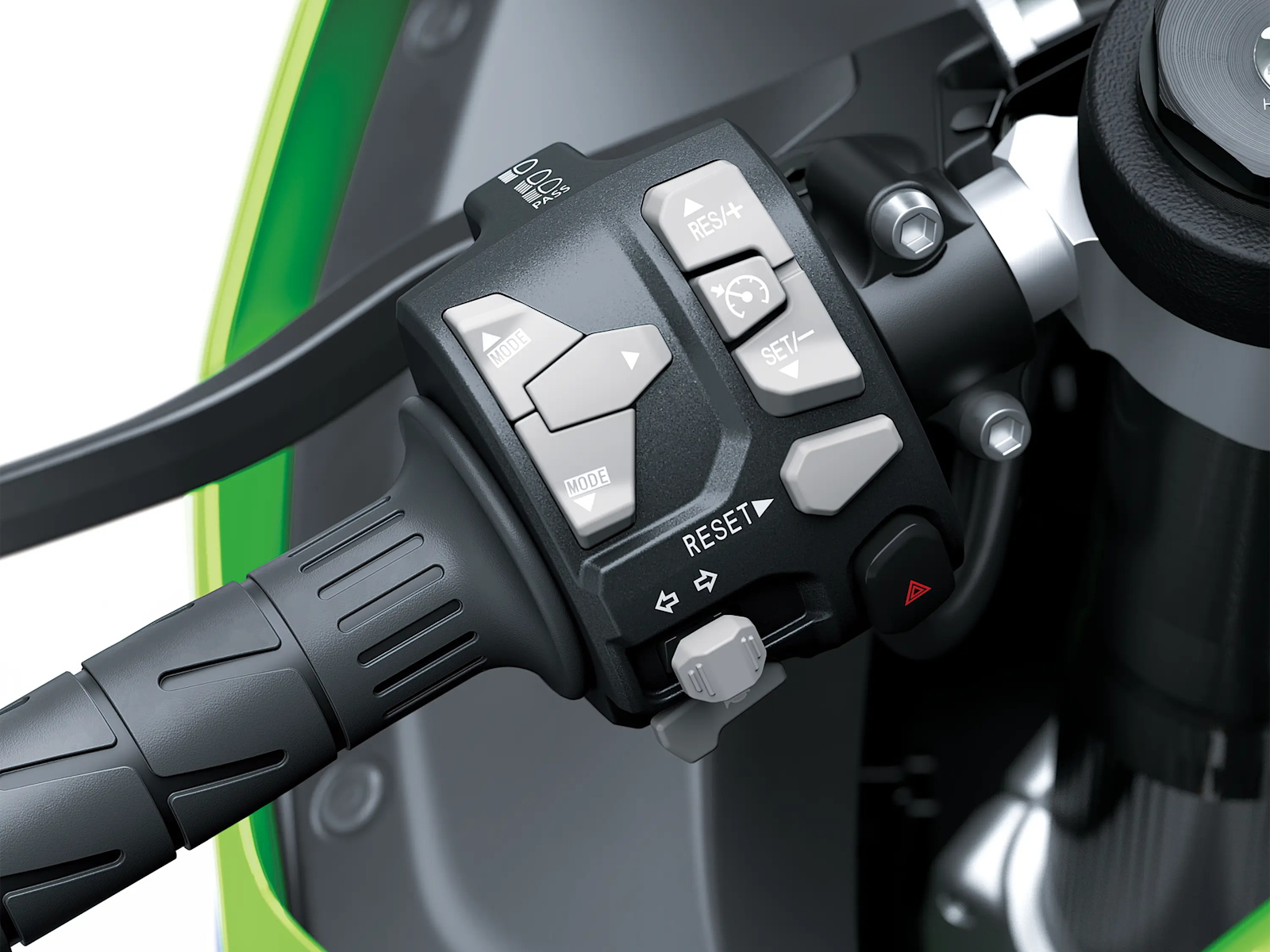
Electronic Cruise Control
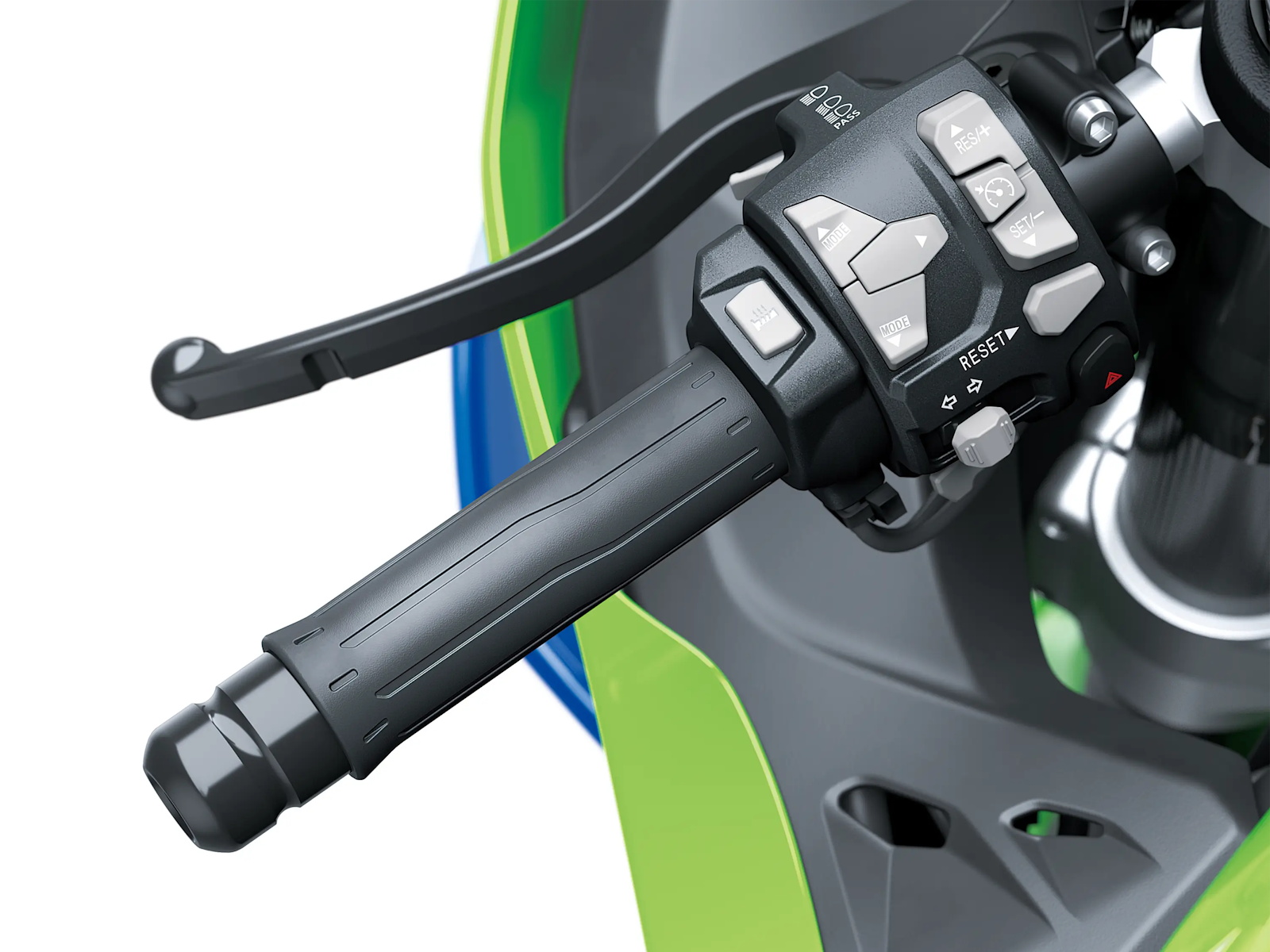
Electronic Cruise Control allows a desired speed (engine rpm) to be maintained with the simple press of a button. Once activated, the rider does not have to constantly apply the throttle. This reduces stress on the right hand when traveling long distances, enabling relaxed cruising and contributing to a high level of riding comfort.
Electronic Throttle Valves
Kawasaki's fully electronic throttle actuation system enables the ECU to control the volume of both the fuel (via fuel injectors) and the air (via throttle valves) delivered to the engine. Ideal fuel injection and throttle valve position results in smooth, natural engine response and the ideal engine output. The system also makes a significant contribution to reduced emissions.
Electronic throttle valves also enable more precise control of electronic engine management systems like S-KTRC and KTRC, and allow the implementation of electronic systems like KLCM, Kawasaki Engine Brake Control, dual-direction KQS, and Electronic Cruise Control.
Kawasaki Engine Brake Control
The Kawasaki Engine Brake Control system allows riders to select the amount of engine braking they prefer. When the system is activated, the engine braking effect is reduced, providing less interference when riding on the track.
KCMF (Kawasaki Cornering Managment Function)
Using the latest evolution of Kawasaki's advanced modeling software and feedback from a compact IMU (Inertial Measurement Unit) that gives an even clearer real-time picture of chassis orientation, KCMF monitors engine and chassis parameters throughout the corner - from entry, through the apex, to corner exit - modulating brake force and engine power to facilitate smooth transition from acceleration to braking and back again, and to assist riders in tracing their intended line through the corner. The systems that KCMF oversees vary by model, but may include:
- S-KTRC/KTRC (including traction management and wheel lift management)
- KLCM (including traction management and wheel lift management) - Designed to optimize acceleration from a stop
- KIBS (including pitching management and corner braking management)
- Kawasaki Engine Brake Control
KLCM (Kawasaki Launch Control Mode)
Designed to assist riders by optimizing acceleration from a stop, KLCM electronically manages engine output to minimize wheel spin when moving off. With the clutch lever pulled in and the system activated, engine speed is limited to a determined speed while the rider holds the throttle open. Once the rider releases the clutch lever to engage the clutch, engine speed is allowed to increase, but power is regulated to minimize wheel spin and help keep the front wheel on the ground. The system disengages automatically once a predetermined speed has been reached, or when the rider shifts into third gear. Depending on the model, riders can choose from multiple modes, each offering a progressively greater level of intrusion.
KQS (Kawasaki Quick Shifter)
Designed to help riders maximize their acceleration on the track by enabling clutchless upshifts with the throttle fully open, KOS detects that the shift lever has been actuated and sends a signal to the ECU to cut ignition so that the next gear can be engaged without having to use the clutch. On models that offer clutchless downshifts, during deceleration the system automatically controls engine speed so that the next lower gear can be selected without operating the clutch.
Power Modes
Models equipped with multiple Power Modes offer riders an easily selectable choice of engine power delivery to suit riding conditions or preference. The number of modes vary by model, as do the types of modes available. Some modes limit maximum power, while others offer milder (or sharper) throttle response. Other modes cater to specific riding or driving situations.
Rideology the App Motorcycle
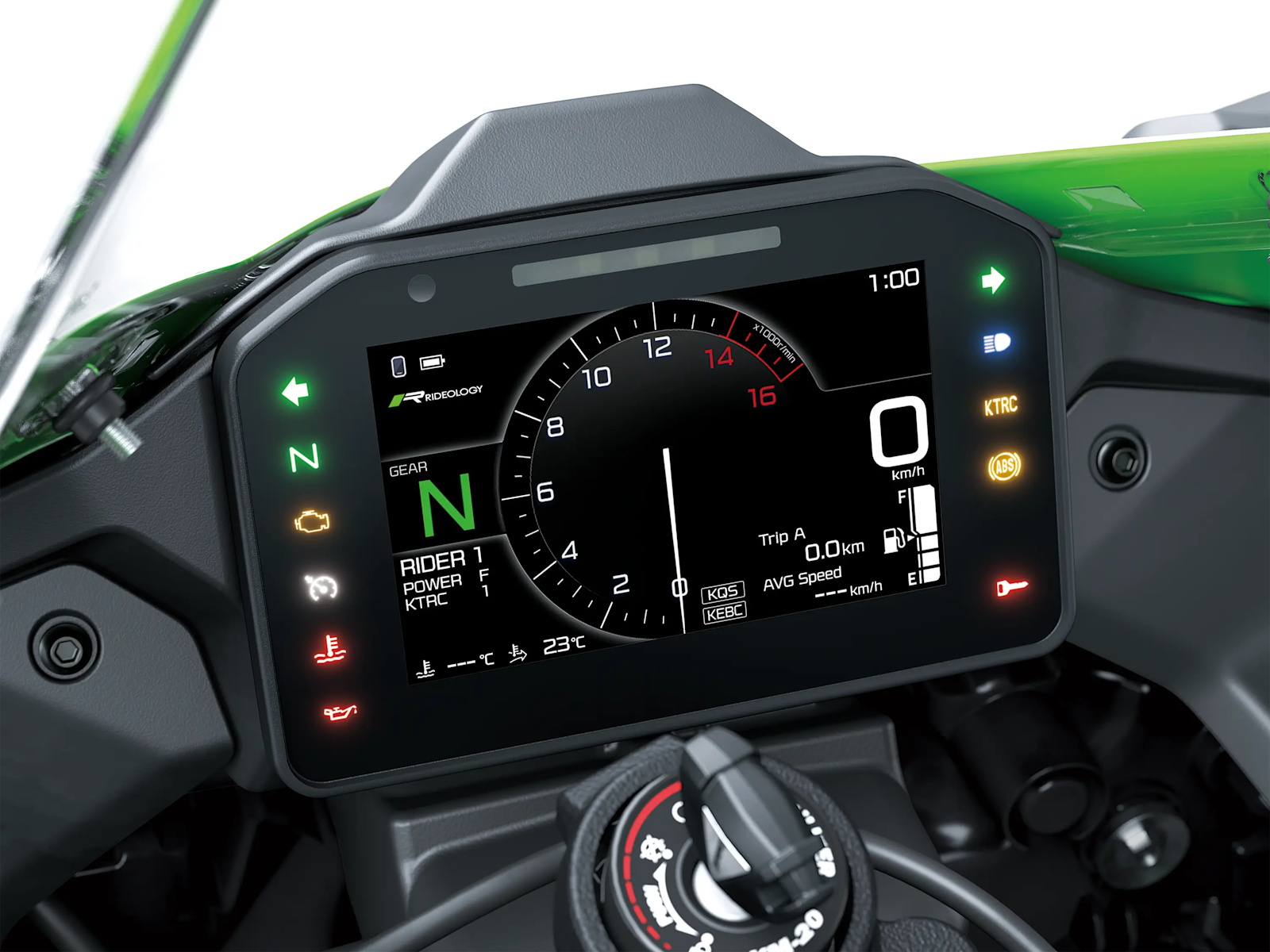
Clever technology enables riders to connect to their motorcycle wirelessly. Using the smartphone application "RIDEOLOGY THE APP MOTORCYCLE," a number of instrument functions can be accessed, contributing to an enhanced motorcycling experience. Vehicle information (such as the odometer, fuel gauge, maintenance schedule, etc.) can be viewed on the smartphone. Riding logs (varies by model, but may include GPS route, gear position, rpm, and other information) can be viewed on the smartphone. When connected, telephone (call, mail) notices are displayed on the instrument panel. Riders can also make changes to their motorcycle's instrument display settings (preferred units, clock and date setting, etc.) via the smartphone. And on certain models, it is even possible to check and adjust vehicle settings (such as Rider Mode, electronic rider support features, and payload settings) using the smartphone. Smartphone connectivity with voice command is available.
Smartphone Connectivity
Originally offered on Kawasaki's on-road motorcycles, clever technology enables riders to connect to their motorcycle wirelessly. Using the smartphone application "RIDEOLOGY THE APP MOTORCYCLE," a number of instrument functions can be accessed, contributing to an enhanced motorcycling experience. Vehicle information (such as the odometer, fuel gauge, maintenance schedule, etc) can be viewed on the smartphone. Riding logs (varies by model, but may include GPS route, gear position, rpm, and other information) can be viewed on the smartphone and shared with other app users. When connected, telephone (call, mail) notices are displayed on the instrument panel. Riders can also make changes to their motorcycle's instrument display settings (preferred units, clock and date setting, etc) via the smartphone. On select models, features like Navigation and Voice Command are also supported. And on certain models, it is even possible to check and adjust vehicle settings (such as Rider Mode, electronic rider support features, and payload settings) using the smartphone.
On KX competition motorcycles with smartphone connectivity, riders can use the application "RIDEOLOGY THE APP KX" to adjust their bike's engine maps. Real-time Engine Monitoring, and Maintenance and Setup Logs are also available. For KX models equipped with GPS, "RIDEOLOGY THE APP KX2" offers additional functions like Trip Logs that riders can use to create track maps and analyse their performance. Traction Control Selection and Launch Control Selection allow riders to set and fine-tune these functions from the smartphone.
For side x sides, all-terrain vehicles and personal watercraft, "RIDEOLOGY THE APP POWERSPORTSi contributes to an enhanced off-roading or on-water experience. In addition to Trip Log recording and sharing, and vehicle management and maintenance support functions similar to those offered for on-road motorcycles, functions unique to off-road four-wheelers and personal watercraft are also available. Group Ride enables group members to view each other's locations on an in-app map on the smartphone. Geofence functionality alerts app users of no-entry and other zones. For select personal watercraft, RIDEOLOGY THE APP POWERSPORTS can also share person-overboard information with nearby app users.
Feature availability and functionality vary by model and application. For more information, please refer to the Kawasaki Connect web site.
S-KTRC (Sport-Kawasaki Traction Control)
S-KTRC, Kawasaki's original predictive traction control, uses the same base technology as Kawasaki works machines. Designed to maximize acceleration, it allows riding at the edge of traction on the track. This technology continually controls the rear wheel slip that occurs when power is applied, ensuring optimal acceleration. In general, maximum forward drive requires a certain amount of slip. To ensure the most effective transfer of power to the tarmac, S-KTRC monitors the slip ratio in real time, and governs engine power delivery to optimize rear wheel traction.
S-KTRC monitors a number of parameters, including front and rear wheel speed (slip), engine rpm, throttle position and acceleration. Conditions are confirmed every five milliseconds, at which time the system looks at each of the parameters as well has how much they are changing (i.e. their rate of change). This unique Kawasaki method makes it possible to make interpolations and precisely calibrate engine output to suit traction conditions. By acting before slippage exceeds the limits of traction, drops in power can be minimized, resulting in ultra-smooth operation.
Because the sophisticated software bases its dynamic analysis on the chassis’ orientation relative to the track surface (rather than relative to a horizontal plane), it is able to take into account corner camber, gradient, etc., and adapt accordingly. It also automatically adjusts for tire wear, different tire profiles, high-grip tires, and numerous other factors that setting-type systems treat as fixed parameters. Models equipped with IMU incorporate chassis-orientation feedback to offer even more precise management.
Chassis Management Technology
ABS (ANTI-LOCK BRAKE SYSTEM)
Kawasaki ABS systems use front and rear wheel sensors to constantly monitor wheel speed. Should information from either of the sensors indicate that wheel lock has occurred, the ABS ECU directs the pump in the ABS unit to modulate brake fluid pressure (releasing and reapplying pressure so that traction can be regained) until normal operation resumes. On models with front-wheel ABS, the same principles apply.
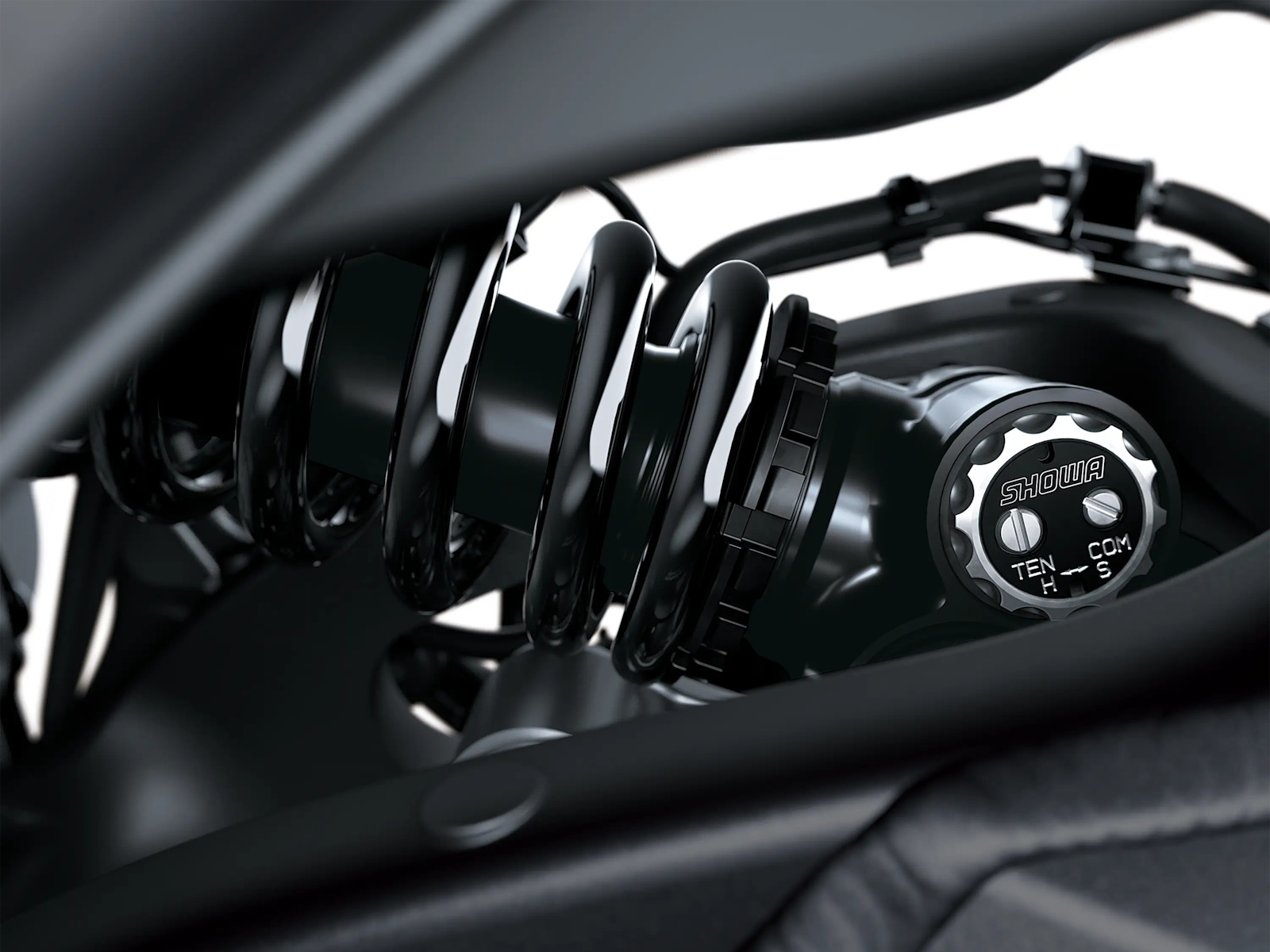
Horizontal Back-Link Rear Suspension
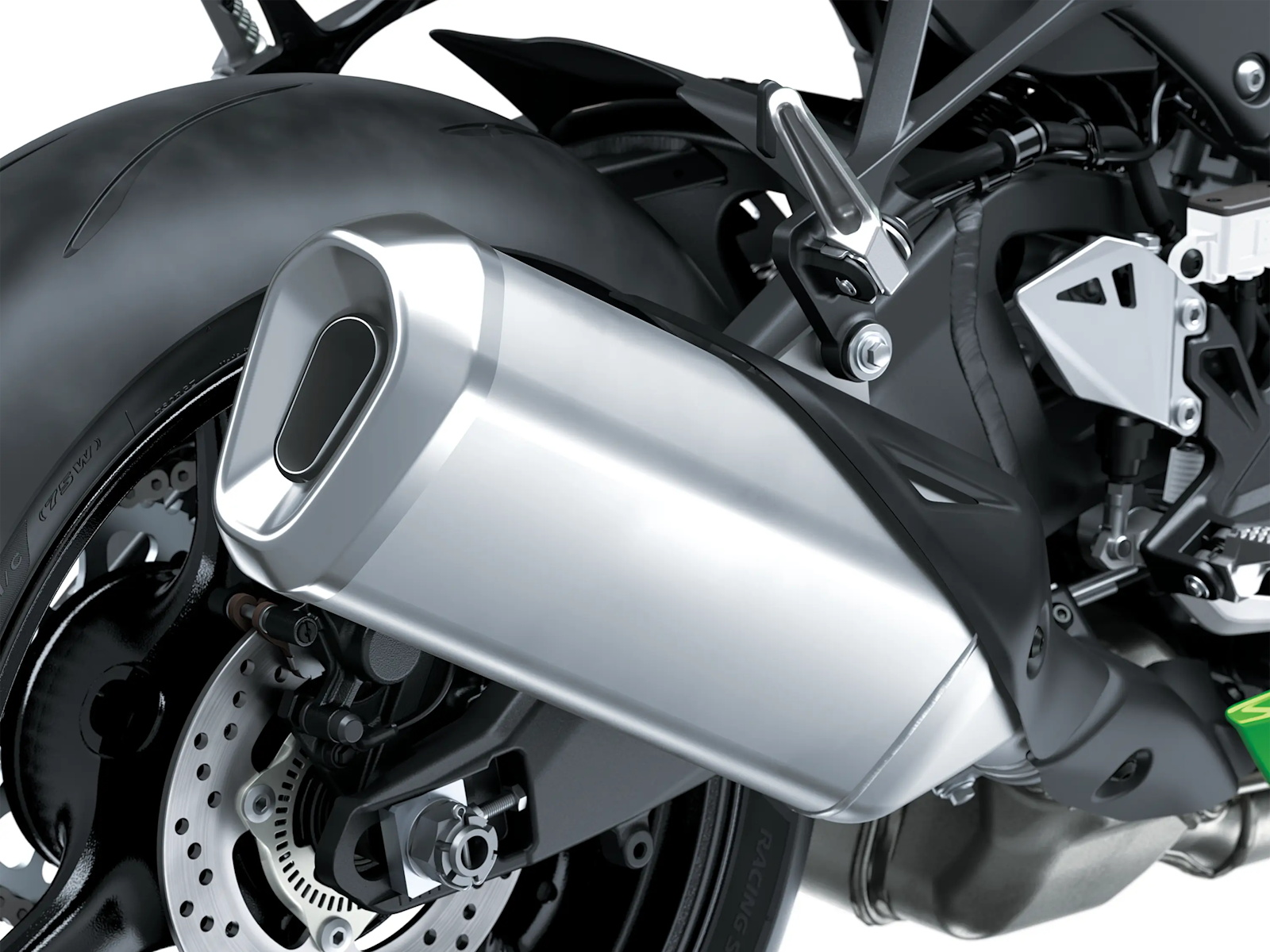
Compared to the Kawasaki traditional Uni-Trak® rear suspension, which mounts the shock unit vertically, with Horizontal Back-link Rear Suspension, the shock unit is almost horizontal. The original Kawasaki suspension arrangement locates the shock unit very close to the bike's center of gravity, greatly contributing to mass centralization. And because there is no linkage or shock unit protruding beneath the swingarm, this frees up space for a larger exhaust pre-chamber (an exhaust expansion chamber situated just upstream of the silencer). With a larger pre-chamber, silencer volume can be reduced, and heavy exhaust components can be concentrated closer to the center of the bike, further contributing to mass centralization. The result is greatly improved handling.
A secondary benefit is that the shock unit is placed far away from exhaust heat. Because it is more difficult for heat from the exhaust system to adversely affect suspension oil and gas pressure, suspension performance is more consistent.
IMU-Enhanced Chassis Orientation Awareness
The strength of Kawasaki's cutting-edge electronics has always been the highly sophisticated programming that, using minimal hardware, gives the ECU an accurate real-time picture of what the chassis is doing. Kawasaki's proprietary dynamic modelling program examines changes in multiple parameters, enabling it to take into account changing road and tyre conditions.
The addition of an IMU (Inertial Measurement Unit) enables inertia along 6 DOF (degrees of freedom to be monitored: acceleration along longitudinal, transverse and vertical axes, plus roll rate, pitch rate and yaw rate. This additional feedback contributes to an even clearer real-time picture of chassis orientation, enabling even more precise management for control at the limit.
KIBS (Kawasaki Intelligent Anti-Lock Brake System)
Kawasaki developed KIBS to take into account the particular handling characteristics of supersport motorcycles, ensuring highly efficient braking with minimal intrusion during sport riding. It is the first mass-production brake system to link the ABS ECU (Electronic Control Unit) and engine ECU.
In addition to front and rear wheel speed, KIBS monitors front brake caliper hydraulic pressure, throttle position, engine speed, clutch actuation and gear position. This diverse information is analyzed to determine the ideal front brake hydraulic pressure. Through precise control, hydraulic pressure is modulated in much smaller increments than with standard ABS systems. The system limits rear wheel lift under heavy braking and takes downshifting into account while braking, allowing the rider to manage the rear brake. And because of the finer control, kickback to the brake lever is minimal, resulting in a very natural feeling.
Features May Include:
- 998cc LIQUID-COOLED, 4-STROKE IN-LINE 4-CYLINDER ENGINE WITH AIR-COOLED OIL COOLER
- LIGHT-HANDLING CHASSIS AND FINE-TUNED SUSPENSION SETTINGS FOR MAXIMIZED AERODYNAMIC PERFORMANCE
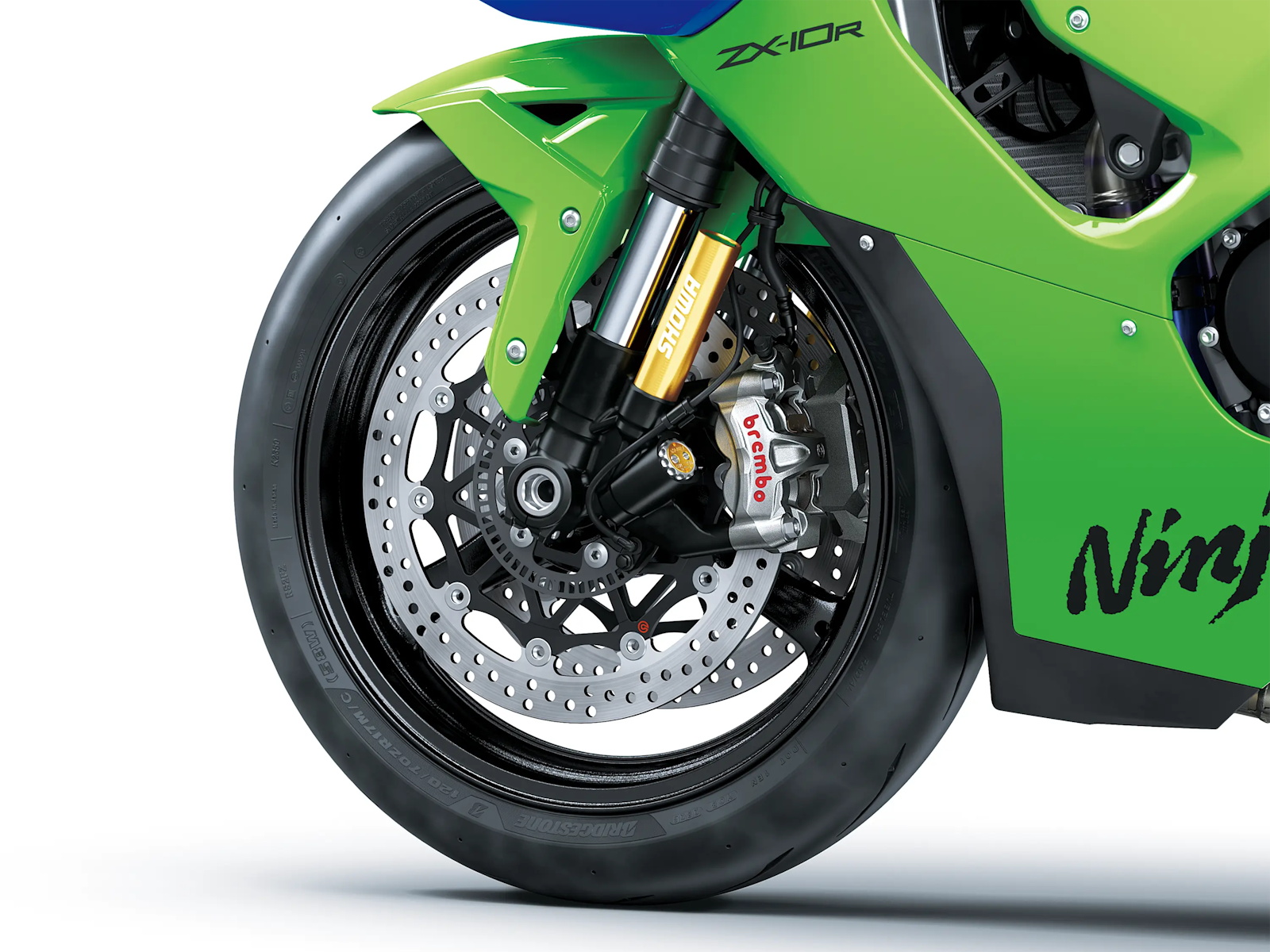
- SHOWA BALANCE FREE SUSPENSION COMPONENTS
- HIGH-PERFORMANCE BREMBO FRONT BRAKE PACKAGE
- IMU-ENHANCED ELECTRONICS PACKAGE
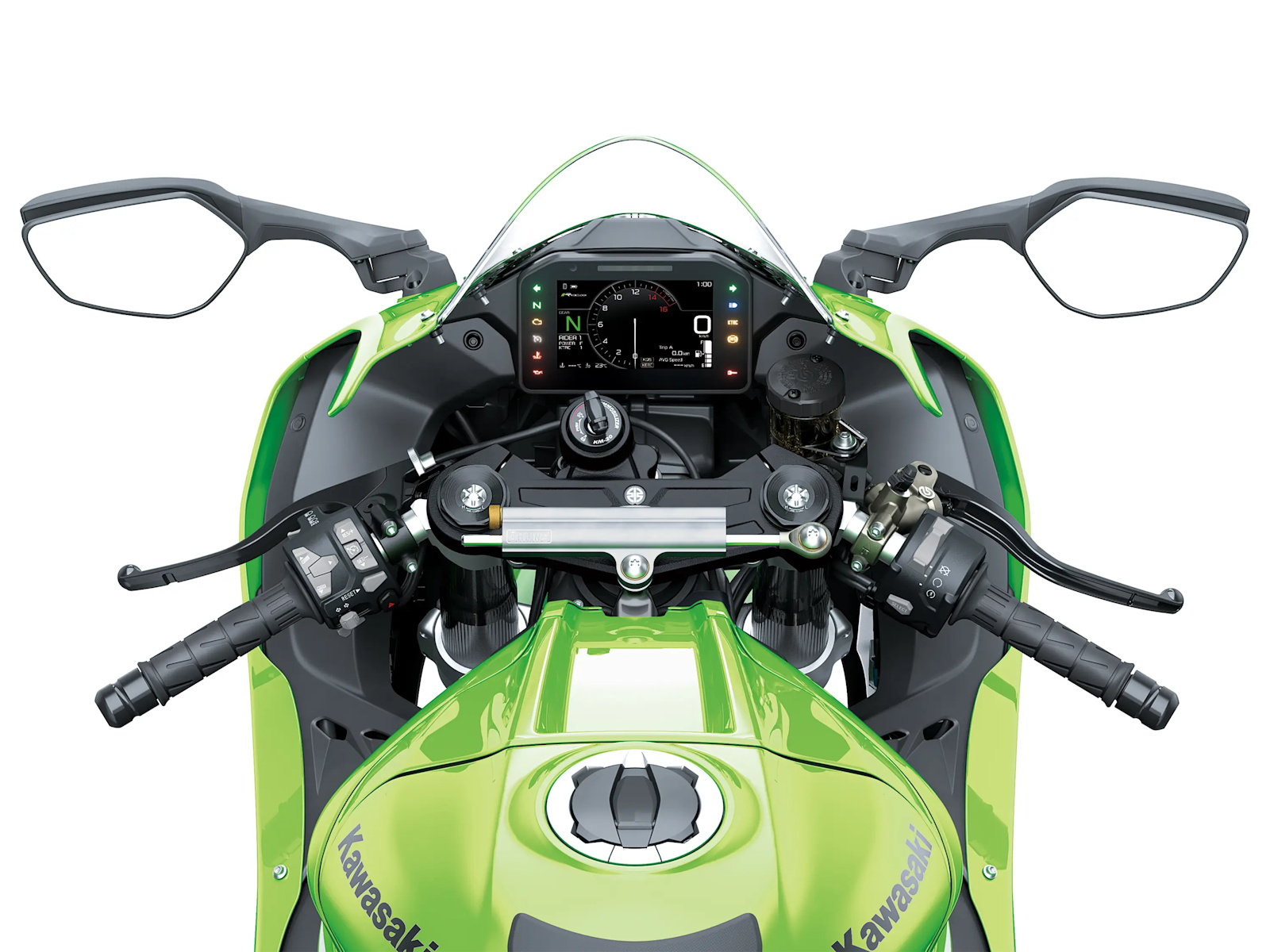
- 5-IN TFT COLOR INSTRUMENTATION WITH SMARTPHONE CONNECTIVITY VIA RIDEOLOGY THE APP MOTORCYCLE† WITH AVAILABLE VOICE COMMAND AND TURN-BY-TURN NAVIGATION
Info
Industry
Powersports
Make
Kawasaki
Model
NINJA ZX-10R NON-ABS
Trim
Metallic Flat Spark Black/Metallic Spark Black
Year
2027
MSRP
16999
Category
Motorcycle
Subcategory
Sport
Specs
Engine Type
4-stroke, in-line 4-cylinder, DOHC, 16-valve, liquid-cooled
Engine Disp to Wgt
998 cc
Bore x Stroke
76.0 x 55.0 mm
Compression Ratio
13.0:1
Horsepower
Maximum: 190.0 hp @ 11,500 rpm
Torque
Maximum: 82.5 lbs-ft @ 11,300 rpm
Fuel Type
Gas
Fuel System
DFI® with 47 mm throttle bodies
Ignition/Starter
TCBI with Electronic Advance
Transmission
6-speed, return shift
Drive Train
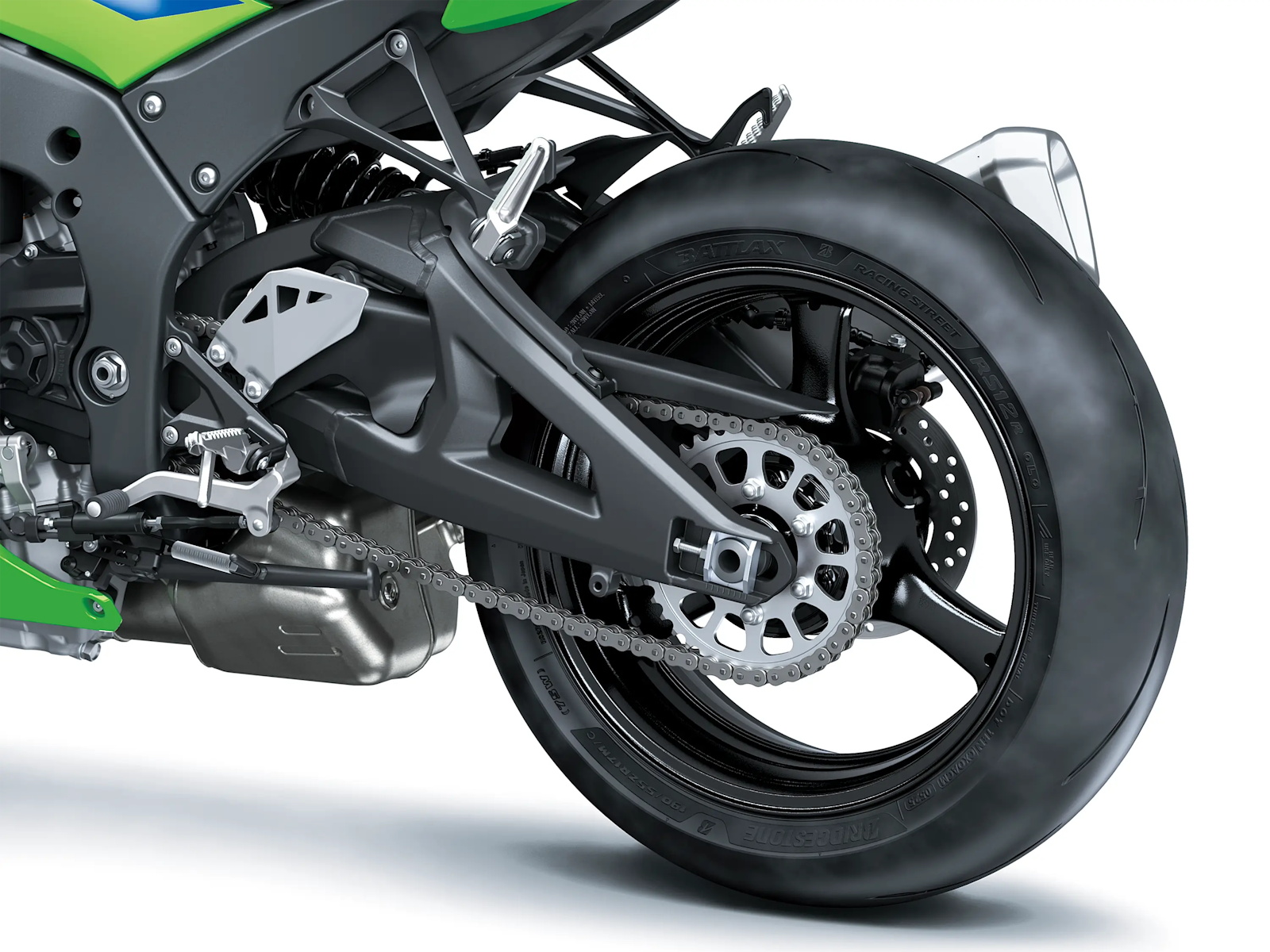
Final Drive: Sealed chain
Suspension (Front)
43mm inverted Showa Balance Free Fork (BFF) with external compression chamber, rebound and compression damping, spring preload adjustability | Wheel Travel: 4.7 in
Suspension (Rear)
Horizontal back-link with Showa Balance Free Rear Cushion (BFRC) lite gas-charged shock with piggyback reservoir, rebound and compression damping, spring preload adjustability | Wheel Travel: 4.2 in
Front Tire
120/70 ZR17
Rear Tire
190/55 ZR17
Front Brake
Dual 330 mm semi-floating Brembo discs with radial-mount 4- piston Brembo M50 monobloc calipers
Rear Brake
Single 220 mm disc with aluminum single-piston caliper
Frame
Type: Twin spar, cast aluminum
Rake
25.0°
Trail
4.1 in
Length
Overall: 82.1 in
Width
Overall: 29.5 in
Height
Overall: 46.5 in
Ground Clearance
5.1 in
Seat Height
32.5 in
Weight (Dry)
421.2 lbs
Weight (Wet)
458.6 lbs
Fuel Capacity
4.5 gal
Wheelbase
57.1 in