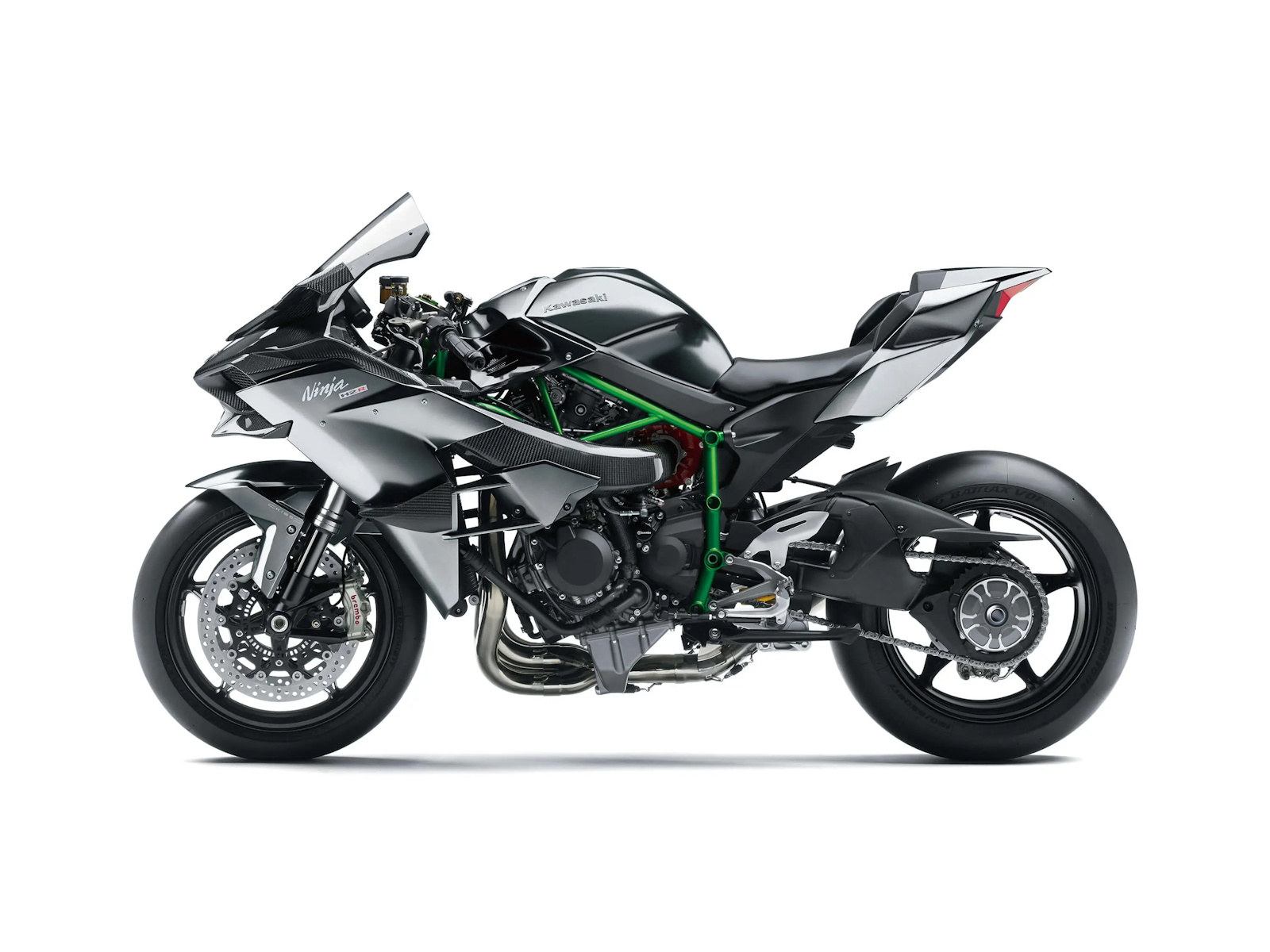
2027 Kawasaki NINJA H2 R ABS Mirror Coated Spark Black
Get in Touch
Description
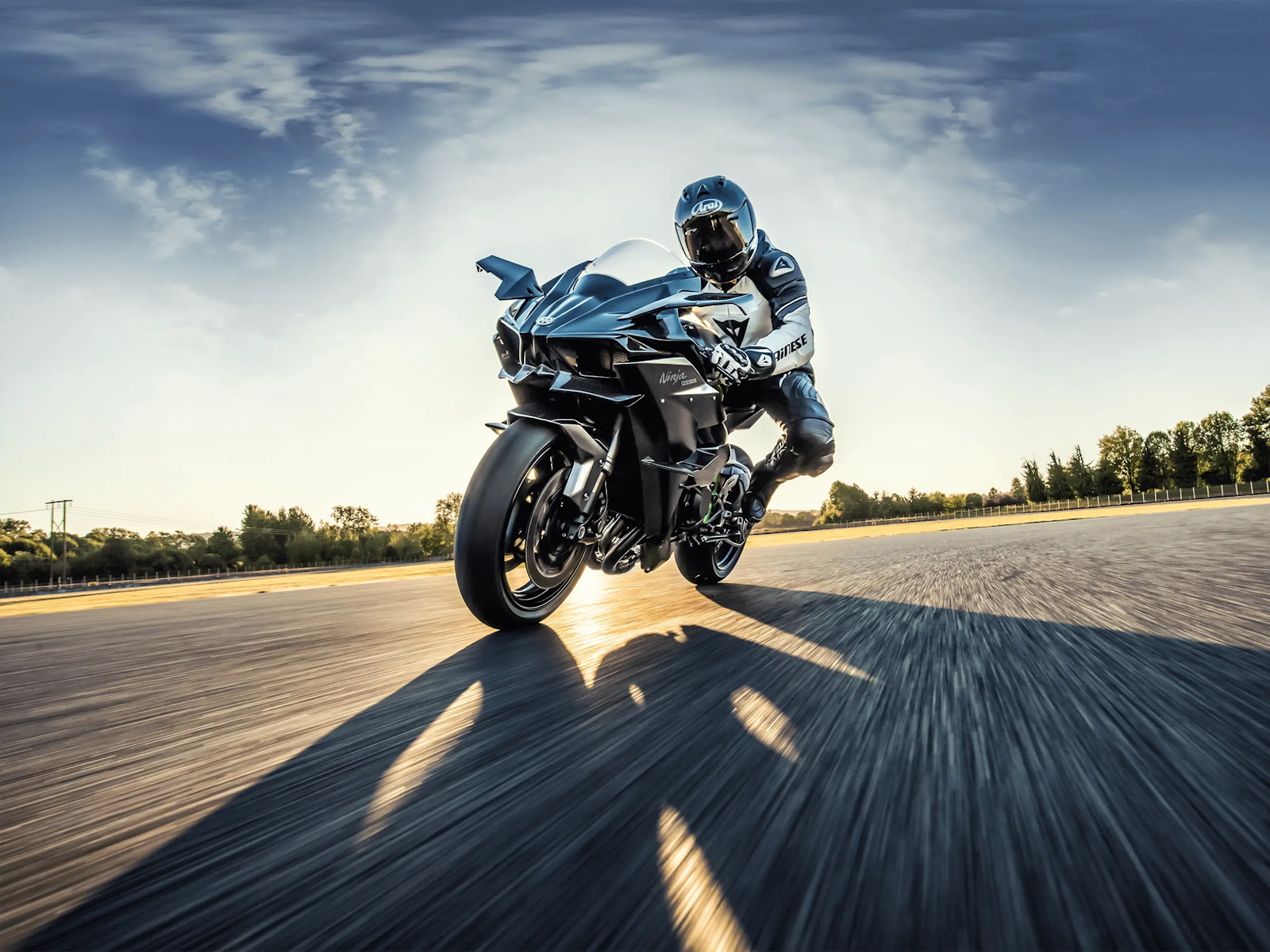
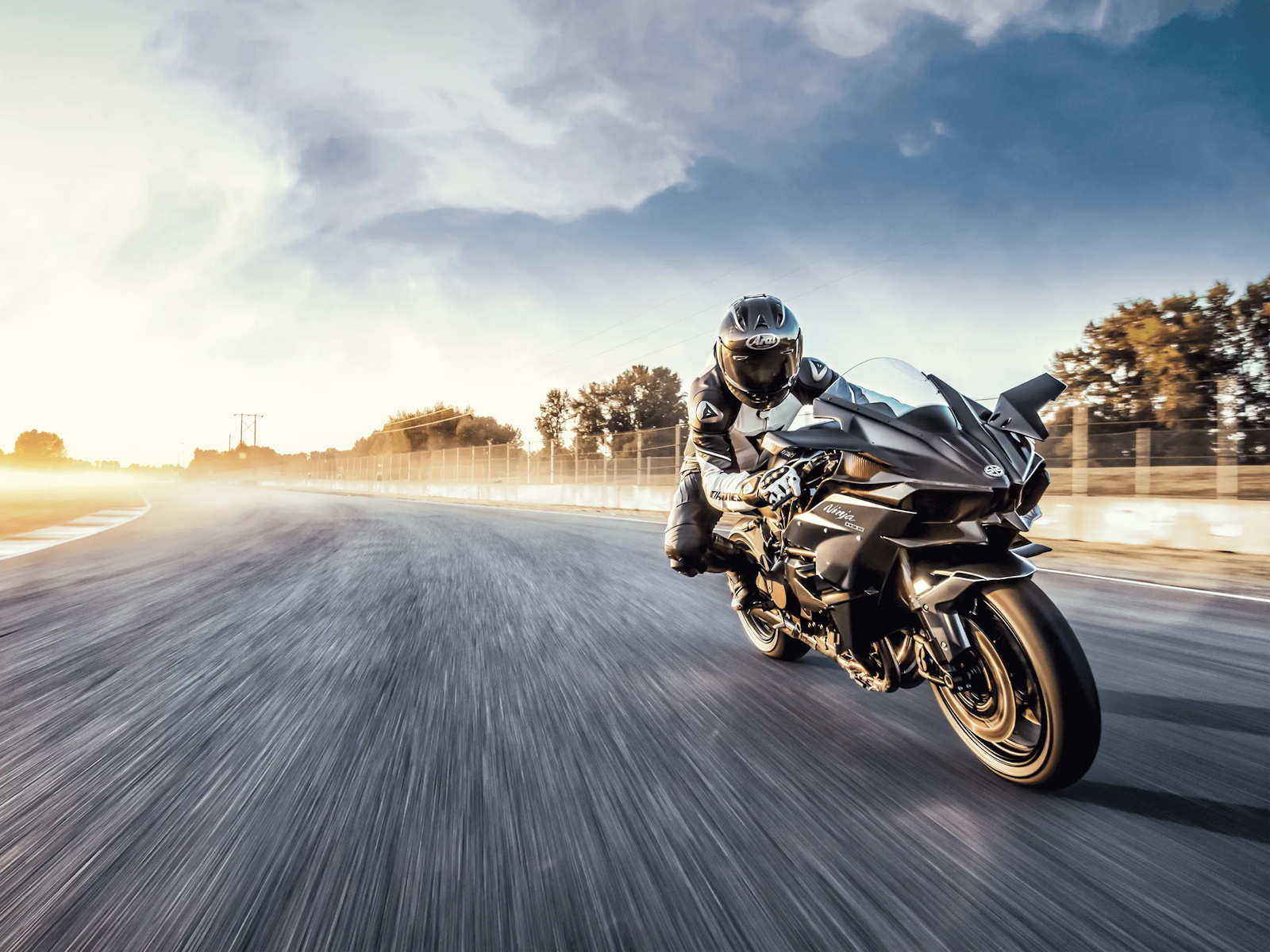
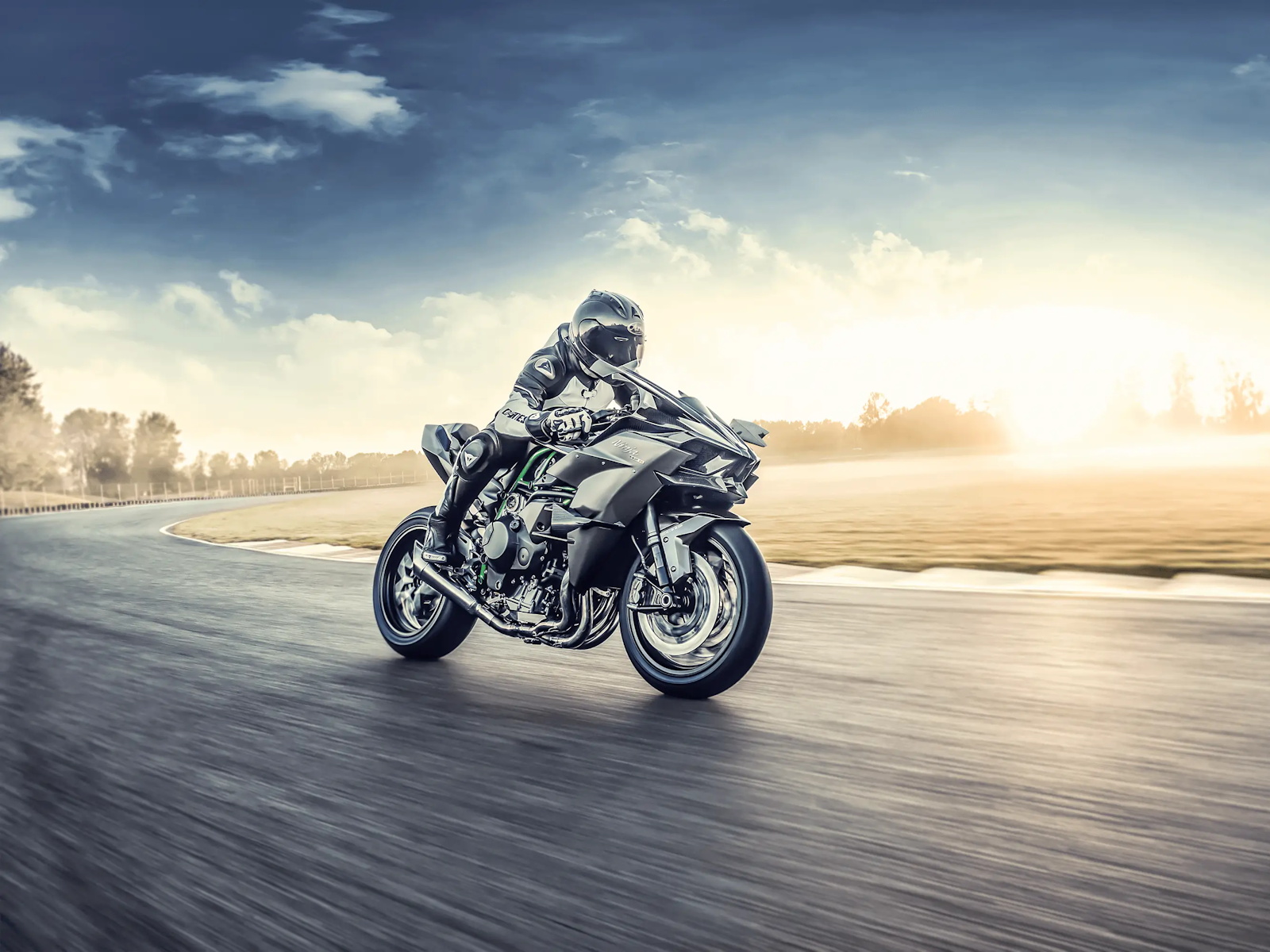
2027 Kawasaki NINJA H2 R ABS Mirror Coated Spark Black
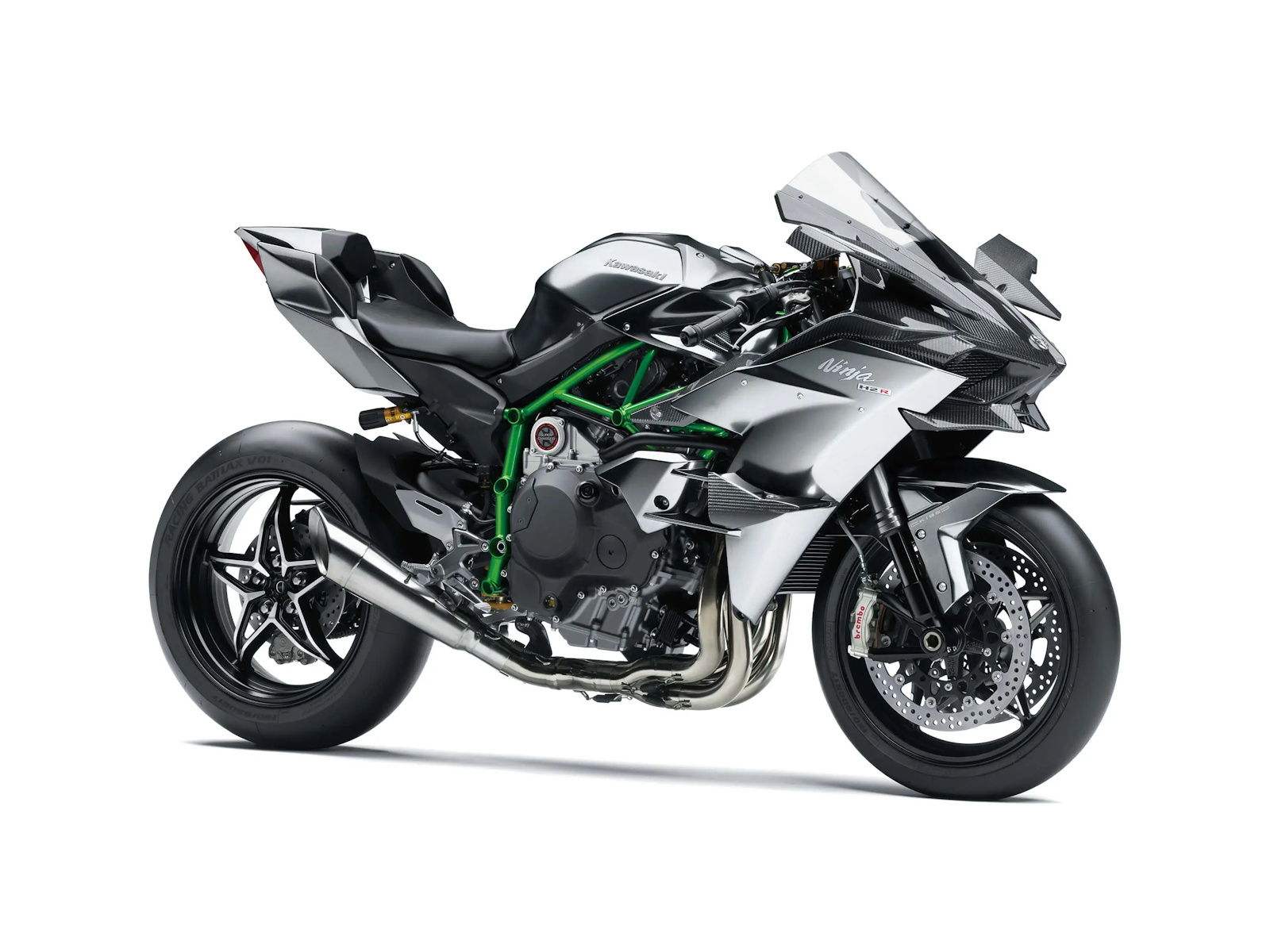
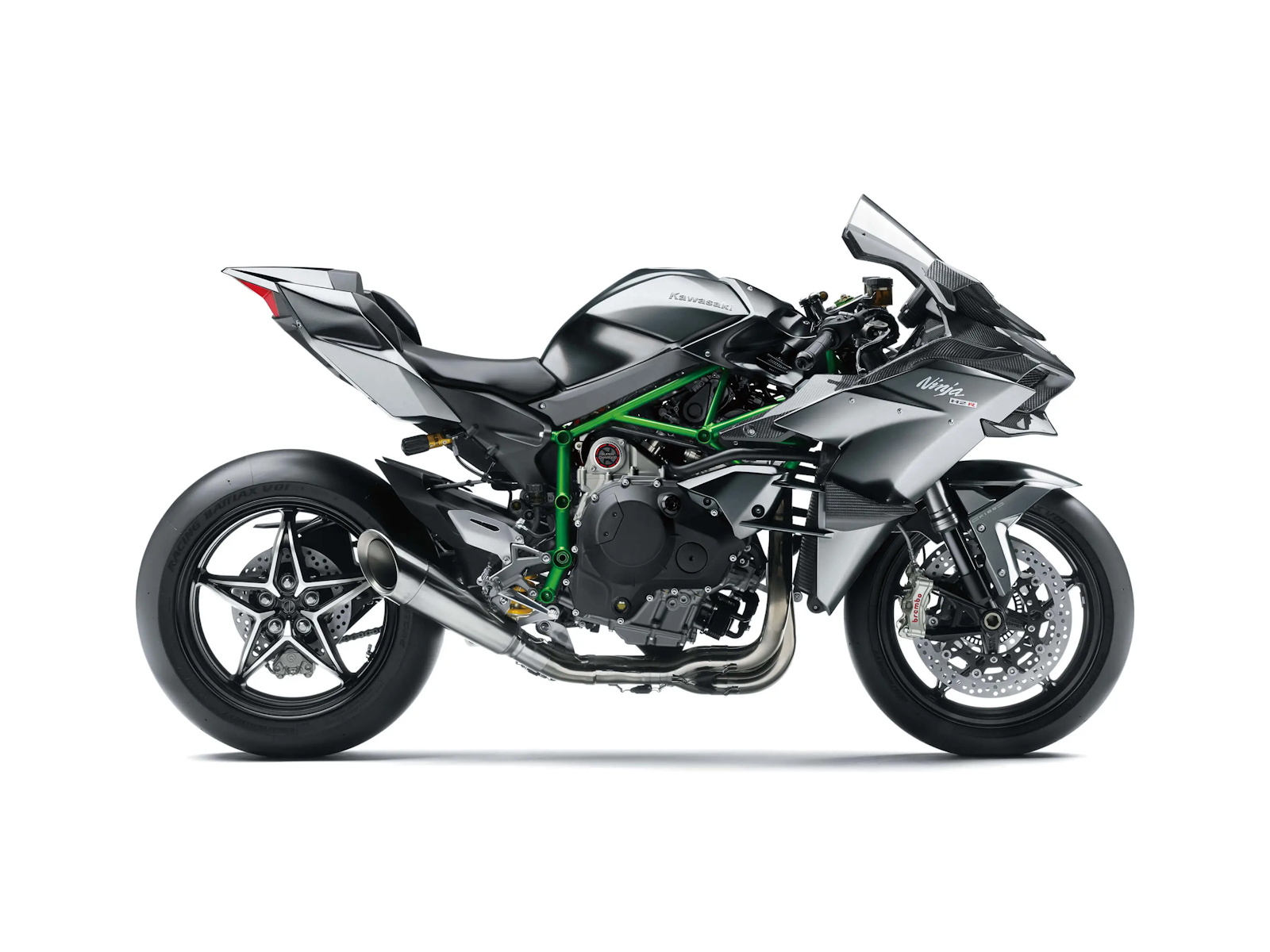
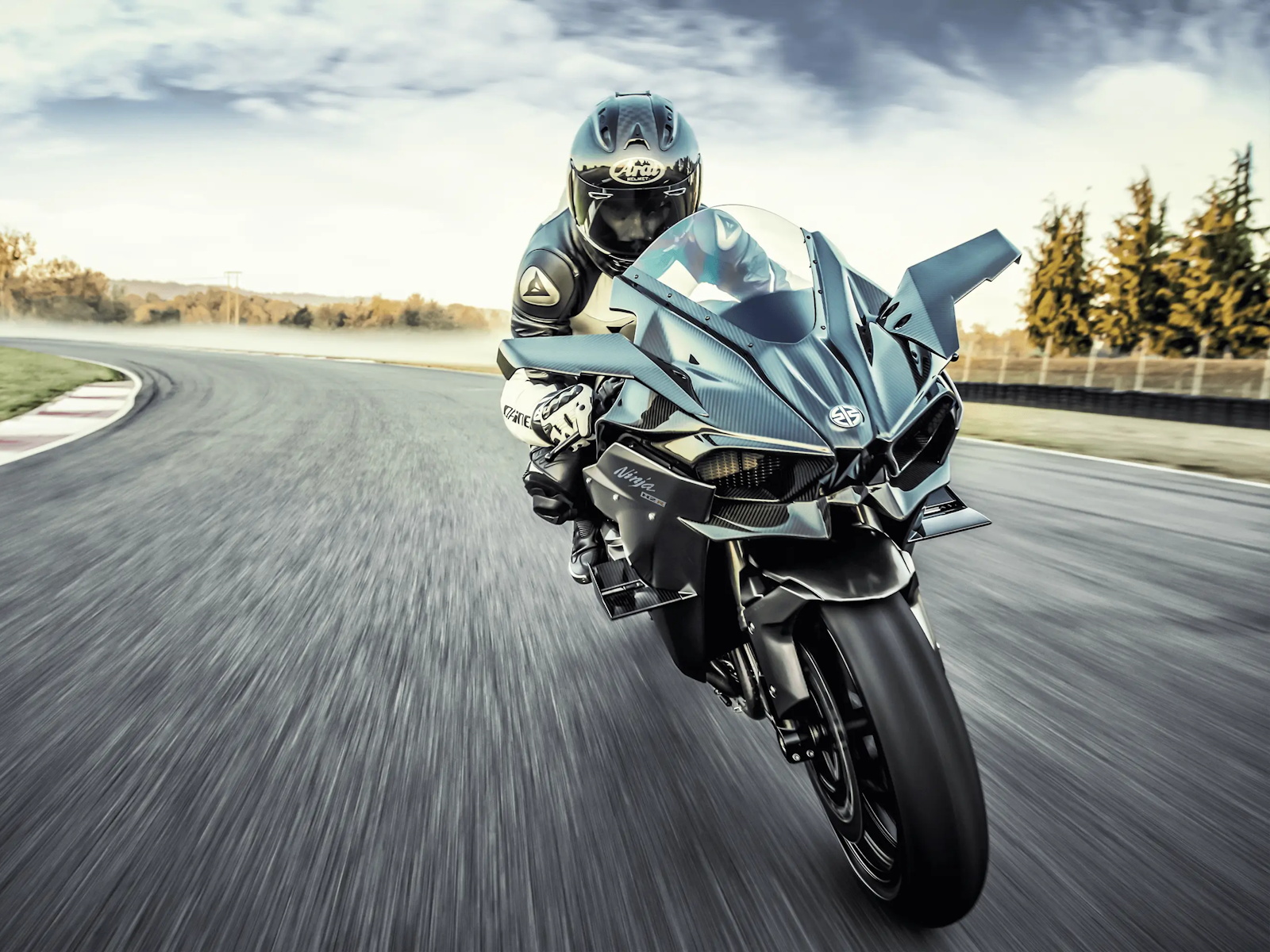
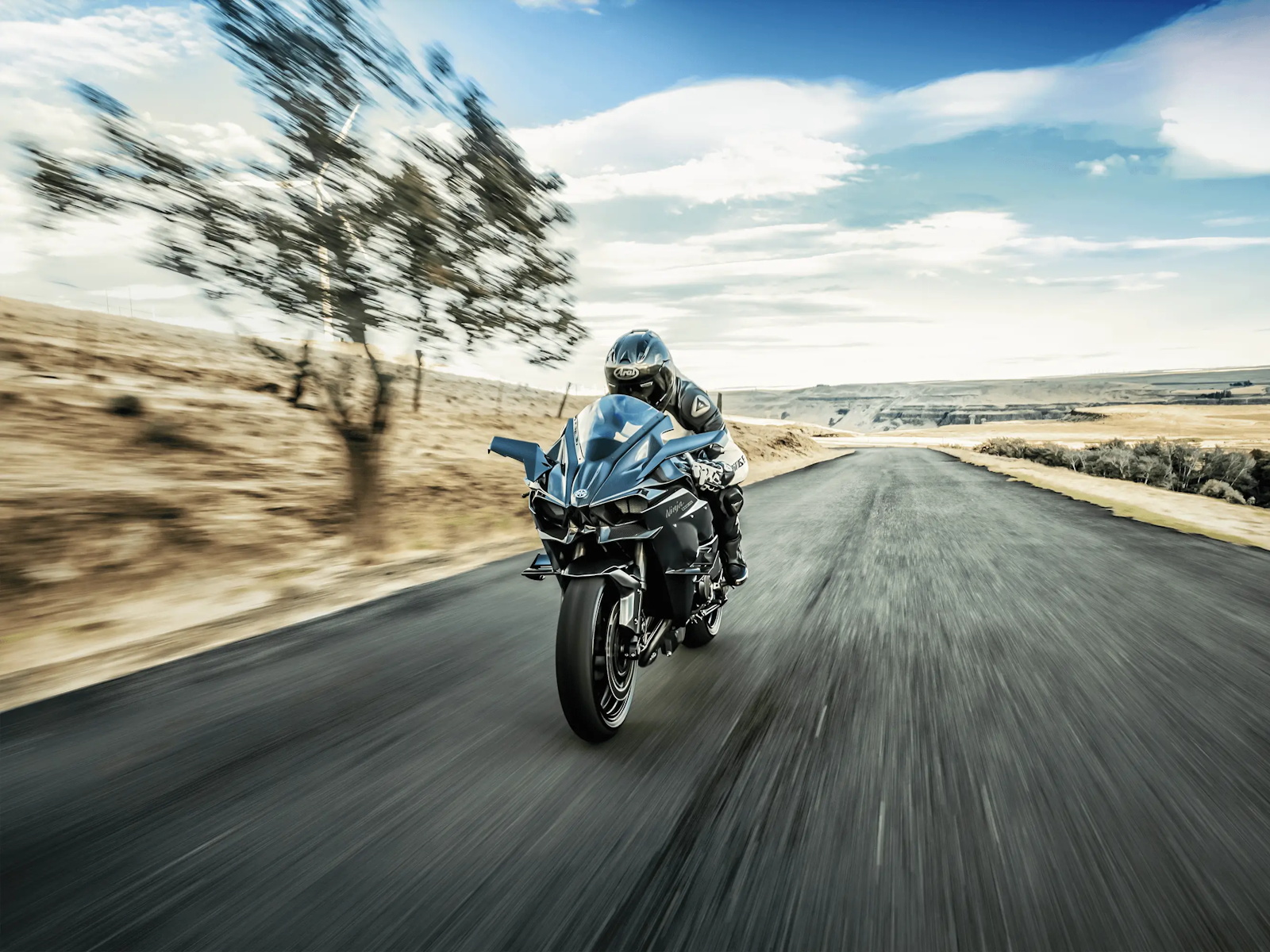
The development of the Ninja H2®R ABS motorcycle goes beyond the boundaries of any other Kawasaki motorcycle. Born through the unprecedented collaboration between multiple divisions within the Kawasaki Heavy Industries, Ltd. (KHI) organization, the limited-production supercharged model represents the unbridled pinnacle of Kawasaki engineering, with astonishing acceleration and mind-bending top speed suitable only for the track.
Economical Riding Indicator
Using high-precision electronic control for engine management, Kawasaki models can achieve a high level of fuel efficiency. However, fuel consumption is greatly affected by throttle use, gear selection, and other elements under the rider's control. The Economical Riding Indicator is a function that indicates when current riding conditions are consuming a low amount of fuel. The system continuously monitors fuel consumption, regardless of vehicle speed, engine speed, throttle position and other riding conditions. When fuel consumption is low for a given speed (i.e. fuel efficiency is high), an "ECO" mark appears on the instrument panel. By riding so that the "ECO" mark remains on, fuel consumption can be reduced.
Electronic Throttle Valves
Kawasaki's fully electronic throttle actuation system enables the ECU to control the volume of both the fuel (via fuel injectors) and the air (via throttle valves) delivered to the engine. Ideal fuel injection and throttle valve position results in smooth, natural engine response and the ideal engine output. The system also makes a significant contribution to reduced emissions.
Electronic throttle valves also enable more precise control of electronic engine management systems like S-KTRC and KTRC, and allow the implementation of electronic systems like KLCM, Kawasaki Engine Brake Control, dual-direction KQS, and Electronic Cruise Control.
Kawasaki Engine Brake Control
The Kawasaki Engine Brake Control system allows riders to select the amount of engine braking hey prefer. When the system is activated, the engine braking effect is reduced, providing less interference when riding on the track.
KCMF (Kawasaki Cornering Managment Function)
Using the latest evolution of Kawasaki's advanced modeling software and feedback from a compact IMU (Inertial Measurement Unit) that gives an even clearer real-time picture of chassis orientation, KCMF monitors engine and chassis parameters throughout the corner - from entry, through the apex, to corner exit - modulating brake force and engine power to facilitate smooth transition from acceleration to braking and back again, and to assist riders in tracing their intended line through the corner. The systems that KCMF oversees vary by model, but may include:
- S-KTRC/KTRC (including traction management and wheel lift management)
- KLCM (including traction management and wheel lift management) - Designed to optimize acceleration from a stop
- KIBS (including pitching management and corner braking management)
- Kawasaki Engine Brake Control
KLCM (Kawasaki Launch Control Mode)
Designed to assist riders by optimizing acceleration from a stop, KLCM electronically manages engine output to minimize wheel spin when moving off. With the clutch lever pulled in and the system activated, engine speed is limited to a determined speed while the rider holds the throttle open. Once the rider releases the clutch lever to engage the clutch, engine speed is allowed to increase, but power is regulated to minimize wheel spin and help keep the front wheel on the ground. The system disengages automatically once a predetermined speed has been reached, or when the rider shifts into third gear. Depending on the model, riders can choose from multiple modes, each offering a progressively greater level of intrusion.
KTRC (Kawasaki Traction Control)
KTRC, Kawasaki's advanced traction control system provides both enhanced sport riding performance and the confidence to negotiate low-traction surfaces. Multiple rider-selectable modes the number of modes varies by model) offer progressively greater levels of intrusion to suit the riding situation and rider preference.
Less intrusive modes maintain optimum traction during cornering. Designed with sport riding in mind, they facilitate acceleration out of corners by maximising forward drive from the rear wheel. And because Kawasaki's sophisticated software bases its dynamic analysis on the chassis' orientation relative to the track surface (rather than relative to a horizontal plane), it is able to take into account corner camber, gradient, etc, and adapt accordingly.
In the more intrusive modes (and for some models, in any mode), when excessive wheel spin is detected, engine output is reduced to allow grip to be regained, effectively enabling riders to negotiate both short, challenging patches (train tracks or manhole covers) and extended stretches of low-traction conditions (wet pavement, cobblestone, gravel) with confidence.
Some models equipped with IMU incorporate chassis-orientation feedback to offer even more precise management.
KQS (Kawasaki Quick Shifter)
Designed to help riders maximize their acceleration on the track by enabling clutchless upshifts with the throttle fully open, KOS detects that the shift lever has been actuated and sends a signal to the ECU to cut ignition so that the next gear can be engaged without having to use the clutch. On models that offer clutchless downshifts, during deceleration the system automatically controls engine speed so that the next lower gear can be selected without operating the clutch.
Supercharged Engine
Drawing on the know-how and technology possessed by the Kawasaki Heavy Industries (KHI) Group, Kawasaki's supercharged engines deliver high engine output while maintaining a compact design. The key to achieving this incredible performance lies in the engines' superchargers - vehicle-specific units designed completely in-house with technology from Kawasaki's Gas Turbine & Machinery Company, Aerospace Company and Corporate Technology Division.
One of the greatest benefits of designing the superchargers in-house and tailoring their design to match the engines' characteristics was that engineers were able to achieve high-efficiency operation over a wide range of conditions - something that would not have been possible by simply dropping in or trying to adapt an aftermarket automotive supercharger.
The importance of high efficiency in a supercharger is that, as the air is compressed, power-robbing heat gain is minimal. And while many superchargers are able to offer high-efficiency operation in a very limited range of conditions, Kawasaki's superchargers offer high efficiency over a wide range of pressure ratios and flow rates - meaning over a wide range of engine speeds and vehicle speeds. This wide range of efficient operation (similar to having a wide power band) easily translates to strong acceleration. The superchargers' high efficiency and minimal heat gain also meant that for motorcycle applications an intercooler was unnecessary, greatly saving weight and space, and enabling the engine's compact design.
Chassis Management Technology
ABS (ANTI-LOCK BRAKE SYSTEM)
Kawasaki ABS systems use front and rear wheel sensors to constantly monitor wheel speed. Should information from either of the sensors indicate that wheel lock has occurred, the ABS ECU directs the pump in the ABS unit to modulate brake fluid pressure (releasing and reapplying pressure so that traction can be regained) until normal operation resumes. On models with front-wheel ABS, the same principles apply.
IMU-Enhanced Chassis Orientation Awareness
The strength of Kawasaki's cutting-edge electronics has always been the highly sophisticated programming that, using minimal hardware, gives the ECU an accurate real-time picture of what the chassis is doing. Kawasaki's proprietary dynamic modelling program examines changes in multiple parameters, enabling it to take into account changing road and tyre conditions.
The addition of an IMU (Inertial Measurement Unit) enables inertia along 6 DOF (degrees of freedom to be monitored: acceleration along longitudinal, transverse and vertical axes, plus roll rate, pitch rate and yaw rate. This additional feedback contributes to an even clearer real-time picture of chassis orientation, enabling even more precise management for control at the limit.
KIBS (Kawasaki Intelligent Anti-Lock Brake System)
Kawasaki developed KIBS to take into account the particular handling characteristics of supersport motorcycles, ensuring highly efficient braking with minimal intrusion during sport riding. It is the first mass-production brake system to link the ABS ECU (Electronic Control Unit) and engine ECU.
In addition to front and rear wheel speed, KIBS monitors front brake caliper hydraulic pressure, throttle position, engine speed, clutch actuation and gear position. This diverse information is analyzed to determine the ideal front brake hydraulic pressure. Through precise control, hydraulic pressure is modulated in much smaller increments than with standard ABS systems. The system limits rear wheel lift under heavy braking and takes downshifting into account while braking, allowing the rider to manage the rear brake. And because of the finer control, kickback to the brake lever is minimal, resulting in a very natural feeling.
Silver-Mirror Paint
Kawasaki's high-quality original paint has a highly reflective, glasslike metal appearance. Its debut on the 2015 Ninja H2™ and Ninja H2™MR marked its first use on a mass- production vehicle in either the automotive or motorcycle industry.
In the shade the paint has the appearance of its base coat color, but once in the sunlight its highly reflective surface takes on the appearance of the surrounding scenery. The stark difference in the way the paint appears in the light and the shade emphasizes the sculpted shape of the bodywork on which it is applied.
The highly reflective surface is created by inducing a silver mirror reaction (a chemical reaction between a solution of silver ions and a reducing agent) that forms a layer of pure silver (Ag). This Ag layer is what creates the paint's glasslike metal appearance. Compared to candy paints, which use aluminum flakes to generate a sparkling effect, the Ag layer appears as a uniform metallic surface.
In the shade the Ag layer is translucent, allowing the base coat color to show through. This gives the paint a deep, three-dimensional quality.
While the multiple layers of paint on typical mass-production models are done by robot painters, for this silver-mirror paint each layer - from primer to clear coat - is carefully finished by the hands of Kawasaki craftsmen to ensure a flawless, lustrous surface.
Features May Include:
- Closed-course only hypersport motorcycle
- Carbon fiber aerodynamic devices
- Bosch IMU with Kawasaki's dynamic modeling software
- Kawasaki Launch Control Mode (KLCM)
- Kawasaki TRaction Control (KTRC)
- Kawasaki Intelligent anti-lock Brake System (KIBS)
- Kawasaki Quick Shifter (KQS)
- Kawasaki Engine Brake Control (KEBC)
- KYB AOS-II front fork and Öhlins TTX36 rear shock with remote preload adjuster
- Öhlins electronic steering damper
- Lightweight cast aluminum wheels
- Highly durable self-healing paint
Info
Industry
Powersports
Make
Kawasaki
Model
NINJA H2 R ABS
Trim
Mirror Coated Spark Black
Year
2027
MSRP
64300
Category
Motorcycle
Subcategory
Sport
Specs
Engine Type
4-stroke, in-line 4-cylinder, DOHC, 16-valve, liquid-cooled
Engine Cooling
Liquid-cooled
Engine Disp to Wgt
998 cc
Bore x Stroke
76.0 x 55.0 mm
Compression Ratio
8.3:1
Horsepower
Maximum: 322 hp @ 14,000 rpm
Torque
Maximum: 121.5 lbs-ft @ 12,500 rpm
Fuel Type
Gas
Fuel System
DFI® with 50 mm throttle bodies (4) with dual injection; Kawasaki Supercharger
Ignition/Starter
TCBI with Digital Advance
Transmission
6-speed, return shift, dog-ring
Drive Train
Final Drive: Sealed chain
Suspension (Front)
43 mm inverted KYB AOS-II fork with adjustable rebound and compression damping, spring preload adjustability and topout springs | Wheel Travel: 4.7 in
Suspension (Rear)
Uni-Trak®, Öhlins TTX36 gas-charged shock with piggyback reservoir, 30-way compression and rebound damping adjustability, 16-way spring preload adjustability, and topoutspring | Wheel Travel: 5.3 in
Front Tire
Bridgestone Battlax V01F slick 120/60-17
Rear Tire
Bridgestone Battlax V01R slick 190/65-17
Front Brake
Dual 330 mm semi-floating discs with dual radial-mount, opposed 4-piston Brembo Stylema® monobloc calipers, Kawasaki Intelligent anti-lock Brake System (KIBS)
Rear Brake
Single 250 mm disc with opposed 2-piston Brembo caliper, Kawasaki Intelligent anti-lock Brake System (KIBS)
Frame
Type: Trellis, high-tensile steel, with swingarm mounting plate
Rake
25.1°
Trail
4.3 in
Length
Overall: 81.5 in
Width
Overall: 33.5 in
Height
Overall: 45.7 in
Ground Clearance
5.1 in
Seat Height
32.7 in
Weight (Dry)
432.2 lbs
Weight (Wet)
476.3 lbs
Fuel Capacity
4.5 gal
Wheelbase
57.1 in